Food Safety Certifications Explained
FSSC 22000
The GFSI (Global Food Safety Initiative) recognized standard for food safety management. Based on ISO 22000 with additional requirements. This is the certification that major retail chains, QSR brands, and export buyers require. An FSSC 22000 audit covers the entire food safety management system - from raw material sourcing through production to dispatch.
Who needs it: Any manufacturer supplying organized retail, QSR chains, or export markets. It is the baseline for serious B2B food manufacturing.
FSSAI License
FSSAI (Food Safety and Standards Authority of India) licensing is legally required for all food businesses in India. The license number must appear on all food packaging. FSSAI sets standards for food safety, labeling, and hygiene in India.
Who needs it: Every food manufacturer, distributor, and brand in India. This is a legal requirement, not optional.
HACCP
Hazard Analysis and Critical Control Points - a systematic approach to food safety that identifies, evaluates, and controls hazards. HACCP is a component within FSSC 22000, so an FSSC-certified facility inherently follows HACCP principles.
For Export Markets
- FDA Registration (US): Food facilities that manufacture, process, pack, or hold food for US consumption must register with the FDA. This is a facility registration, not a product approval. Important for any manufacturer targeting US export.
- EU Food Safety Compliance: European Union has its own food safety regulations. Manufacturers targeting EU export need to comply with EU standards on labeling, additives, contaminant limits, and traceability.
- GFCO (Gluten-Free Certification Organization): Voluntary certification for gluten-free products. Requires less than 10 ppm gluten (stricter than the standard 20 ppm). Valuable for US market gluten-free products.
Note: These export certifications are listed as educational reference for brands planning to export. Manufacturers should be evaluated individually for their specific export certifications and experience.
Quality Testing Standards
NABL Accredited Testing
NABL (National Accreditation Board for Testing and Calibration Laboratories) accreditation ensures testing labs meet international standards. FSSAI norms require periodic testing at NABL-accredited labs - typically every 6 months for ongoing compliance. Day-to-day quality testing is done in-house at the manufacturer's lab.
What Gets Tested
- Microbiological: Total plate count, coliform, yeast & mold, Salmonella, E. coli
- Chemical: Moisture, protein, fat, ash, heavy metals, pesticide residues
- Physical: Colour, texture, cooking quality, rehydration time (for instant products)
- Nutritional: Macro and micronutrient content as per label claims
- Gluten (for GF products): ELISA R5 method, less than 20 ppm standard
- FRK specific: Iron, folic acid, vitamin B12 retention after cooking
Glossary of Key Terms
| Term | Definition |
|---|---|
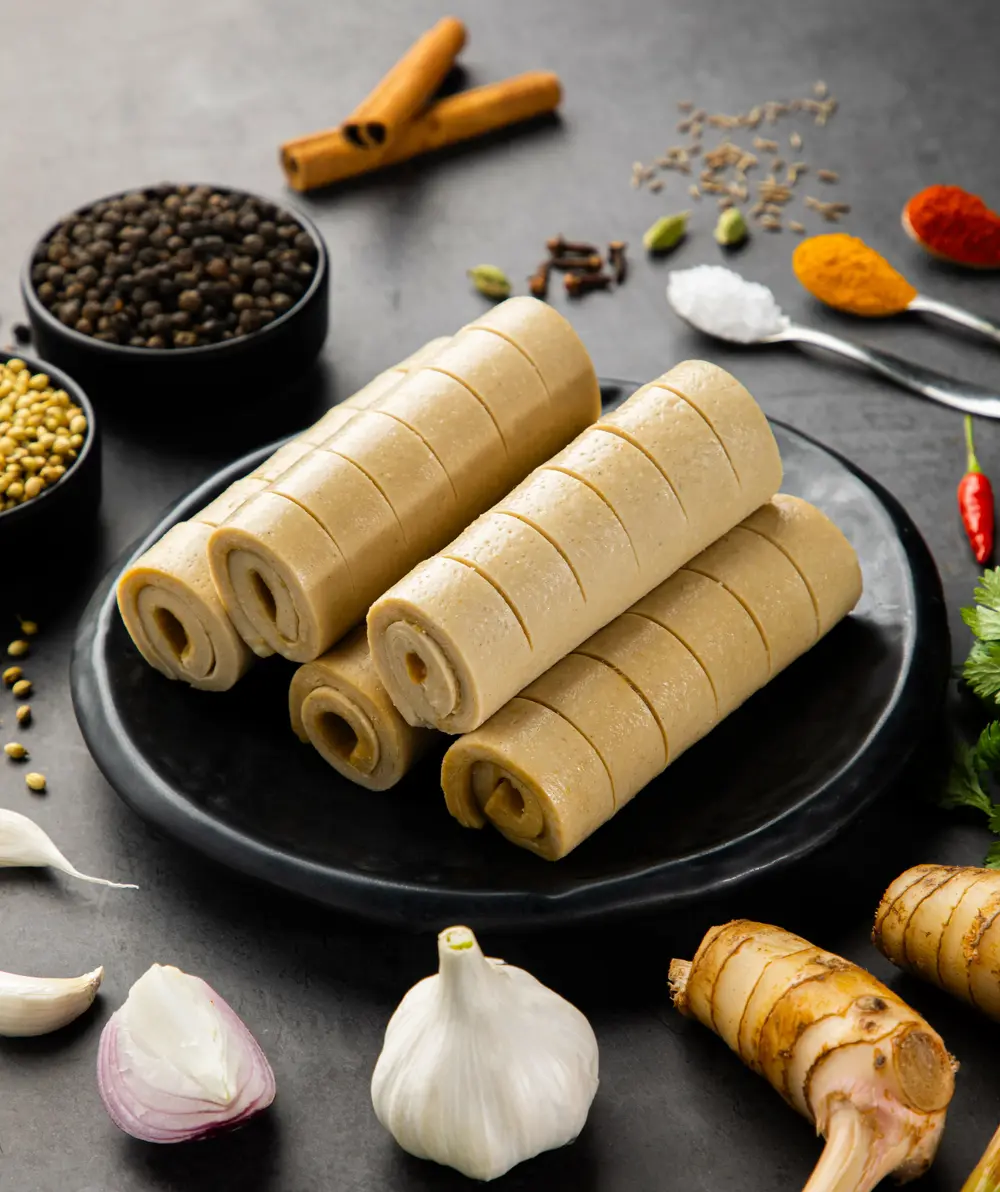
| HMMA | High-Moisture Meat Analog. Extrusion at high moisture that turns plant protein into a fibrous, layered sheet, supplied hydrated (wet textured soy protein). Used for soya chaap, keema, shreds, nuggets, patties, and similar products. |
| TVP | Textured Vegetable Protein. Soy extruded at low moisture and sold dry as chunks, granules, or mince, then soaked before use. |
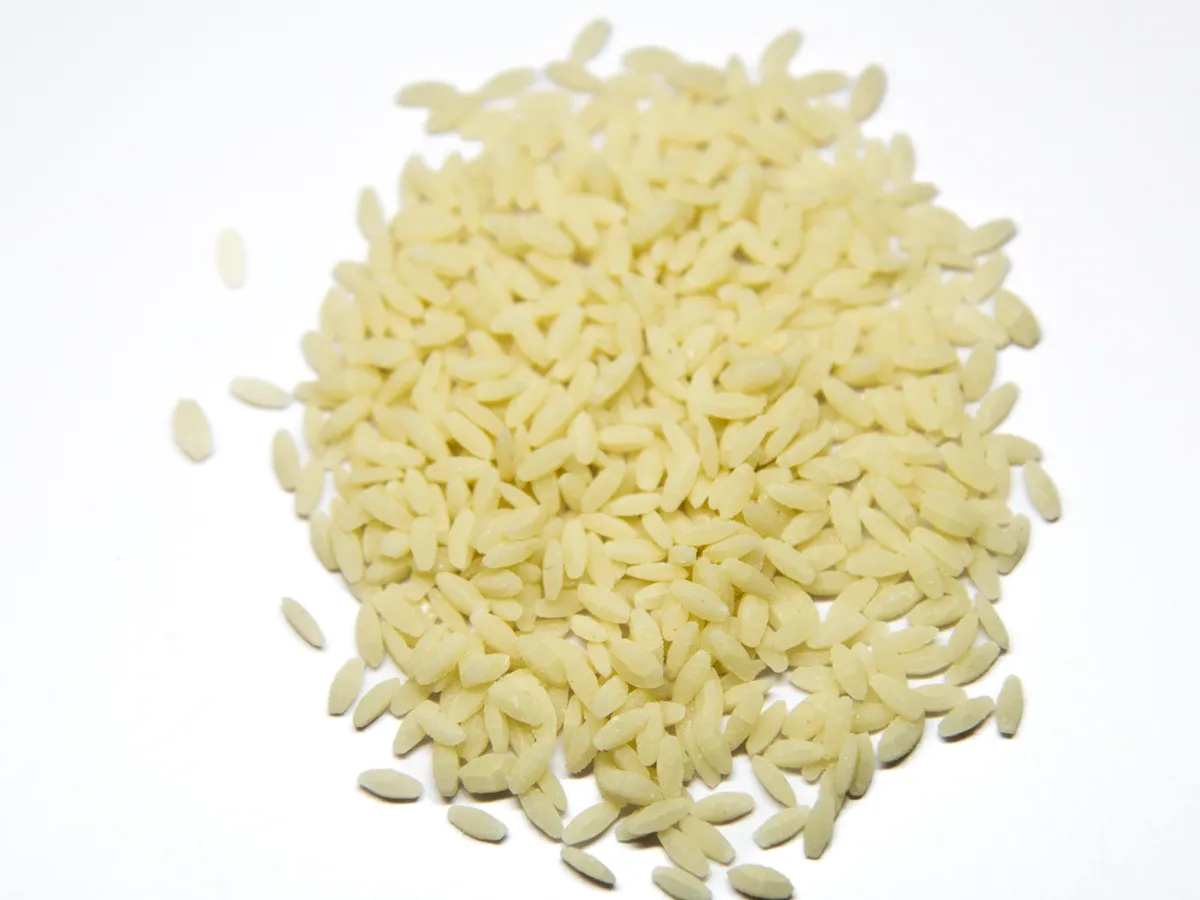
| FRK | Fortified Rice Kernel. Extruded rice kernels enriched with micronutrients (iron, folic acid, vitamin B12). Blended with regular rice at 1:100 ratio for enriched rice and nutrition programmes. |
| Retort | High-temperature, high-pressure sterilization process for sealed food packages. Creates shelf-stable products with a long ambient shelf life (24 months for Zippy's retort and canned chaap). Used for retort pouches and canned foods. |
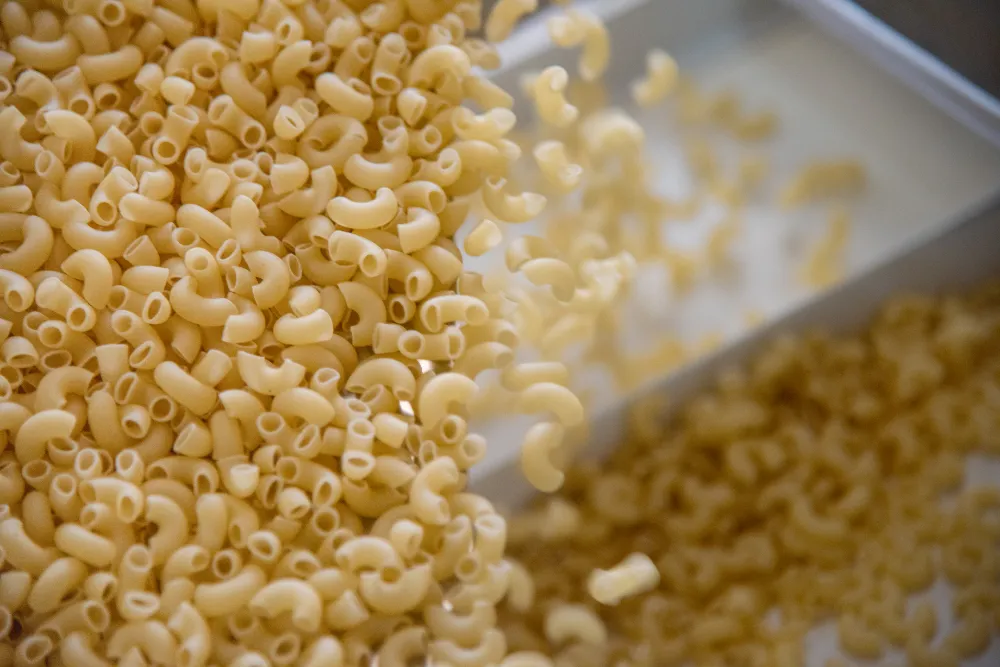
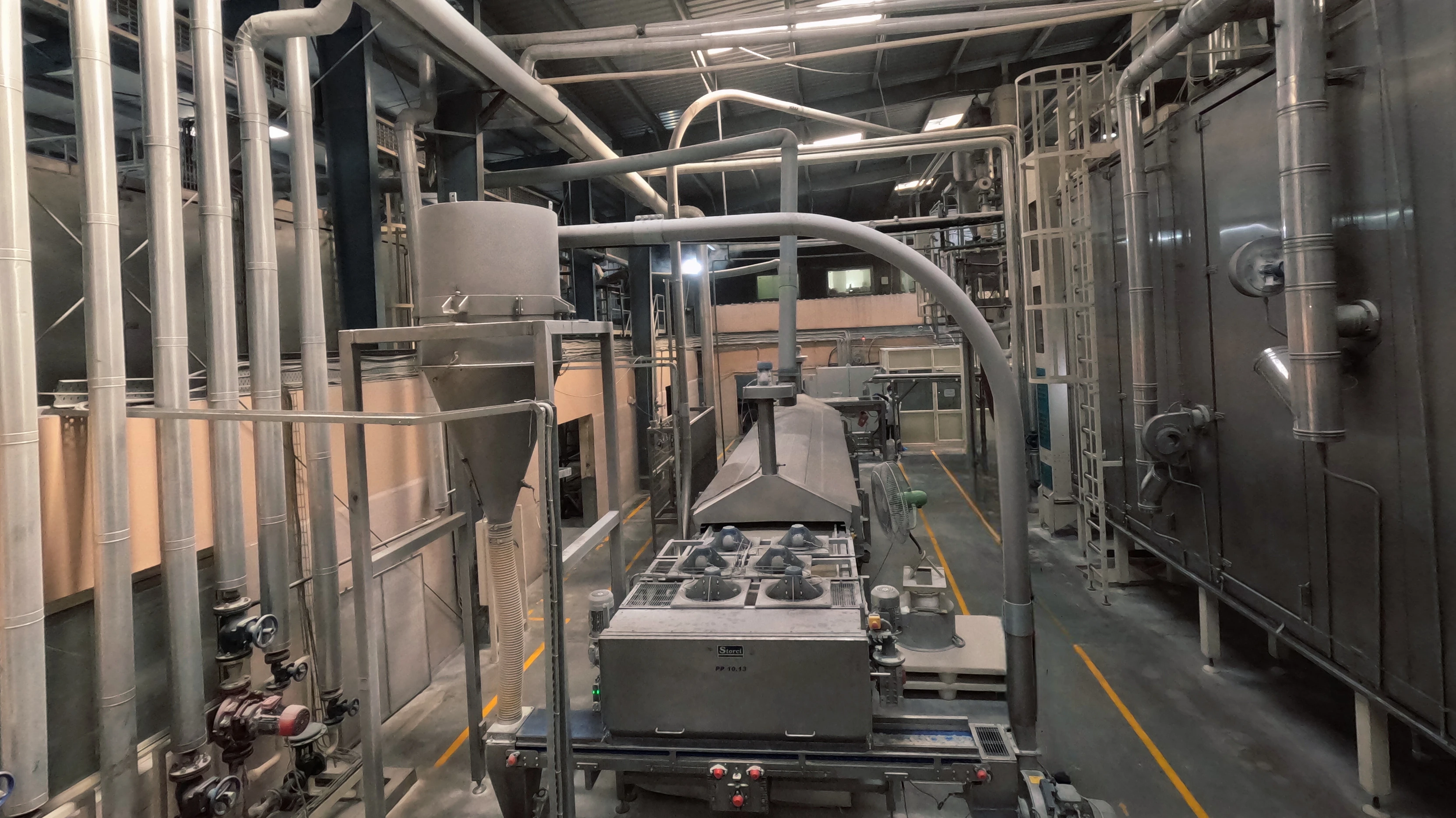
| Extrusion | A manufacturing process where dough or material is pushed through a die under pressure and heat to create specific shapes and textures. Used for pasta, FRK, HMMA, TVP, and snacks. |
| Twin-Screw Extruder | An extruder with two intermeshing screws. Provides better mixing, higher shear, and more process control than single-screw. Required for HMMA production. |
| Cooling Die | A long, temperature-controlled die at the exit of an HMMA extruder. This is where the fibrous, meat-like texture is formed and solidified. A critical component for HMMA quality. |
| VFFS | Vertical Form Fill Seal. Automated packaging machine that forms a pouch from film, fills it with product, and seals it. Standard for retail pasta and snack packaging. |
| MOQ | Minimum Order Quantity. The smallest order a manufacturer will accept. At Zippy Edibles: pasta and vermicelli 5 MT per SKU; rice papad 2.5 MT per SKU; FRK 5 MT; instant rice 5 MT; frozen protein 1 MT pilot; full truck for regular frozen supply. |
| GFSI | Global Food Safety Initiative. Benchmarks food safety standards worldwide. FSSC 22000 is a GFSI-recognized scheme. |
| RTC | Ready-to-Cook. Products that need one cooking step (searing, grilling, baking, or frying for coated snacks) before consumption. Frozen soya chaap and protein snacks are RTC products. |
| RTE | Ready-to-Eat. Products that can be consumed directly or after simple heating. Canned/retort chaap is RTE. |
| Gelatinization | The process where starch granules absorb water and swell when heated, forming a gel. Critical in pasta cooking and instant rice production. |
| Short-Cut Vermicelli (Seviyan) | Short-strand vermicelli used in upma, payasam, kheer. At Zippy Edibles it is made on our pasta lines. |
| Long-Cut Vermicelli (Seviyan) | Traditional long-strand seviyan, made on a separate traditional line. |