
Soya chaap manufacturer, India Bound by protein, not maida. Hygienic and stick-free.
Soy and wheat protein hold our chaap together, and the plain rolls carry about 20 g of protein per 100 g. Our extruder makes one continuous sheet, and a line we built ourselves slices, rolls and glues it into chaap at our Rudrapur plant.
- Maida-free
- ~20 g protein/100 g, plain rolls
- Stick-free
- No hand-wrapping
- FSSC 22000
Soya Chaap Products - Frozen & Shelf-Stable
Range 1 of 2
Soya Chaap Range
Same HMMA chaap base. Pick the format your channel needs - badges on each SKU show which formats are available. Need keema, shreds, seekh or nuggets in soy protein?
See wet textured soy protein →
1.
Plain Soya Chaap
FrozenRetort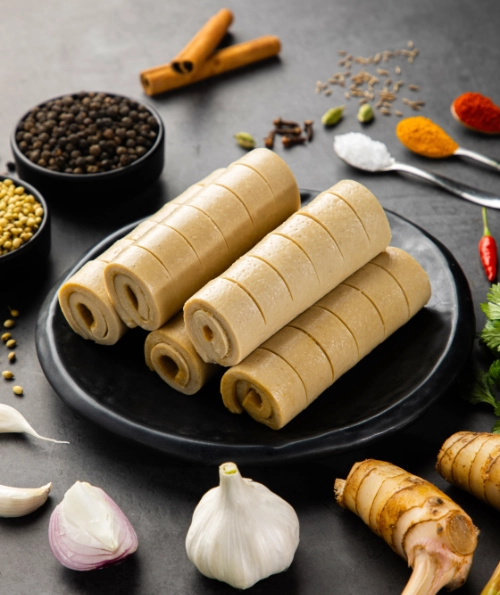
2.
Marinated Soya Chaap
FrozenRetort
3.
Canned Soya Chaap
Canned
4.
Soya Chaap Strips
FrozenRetort
5.
Soya Chaap Chunks
FrozenRetort
Range 2 of 2
Retort Chaap in a Pouch
Shelf-stable retort pouches - fully cooked, 24-month ambient shelf life, no cold chain needed. Ready to heat and eat or finish on the tava. Ideal for retail, D2C, HoReCa, and export.
1.
Chaap Rolls in Brine
Retort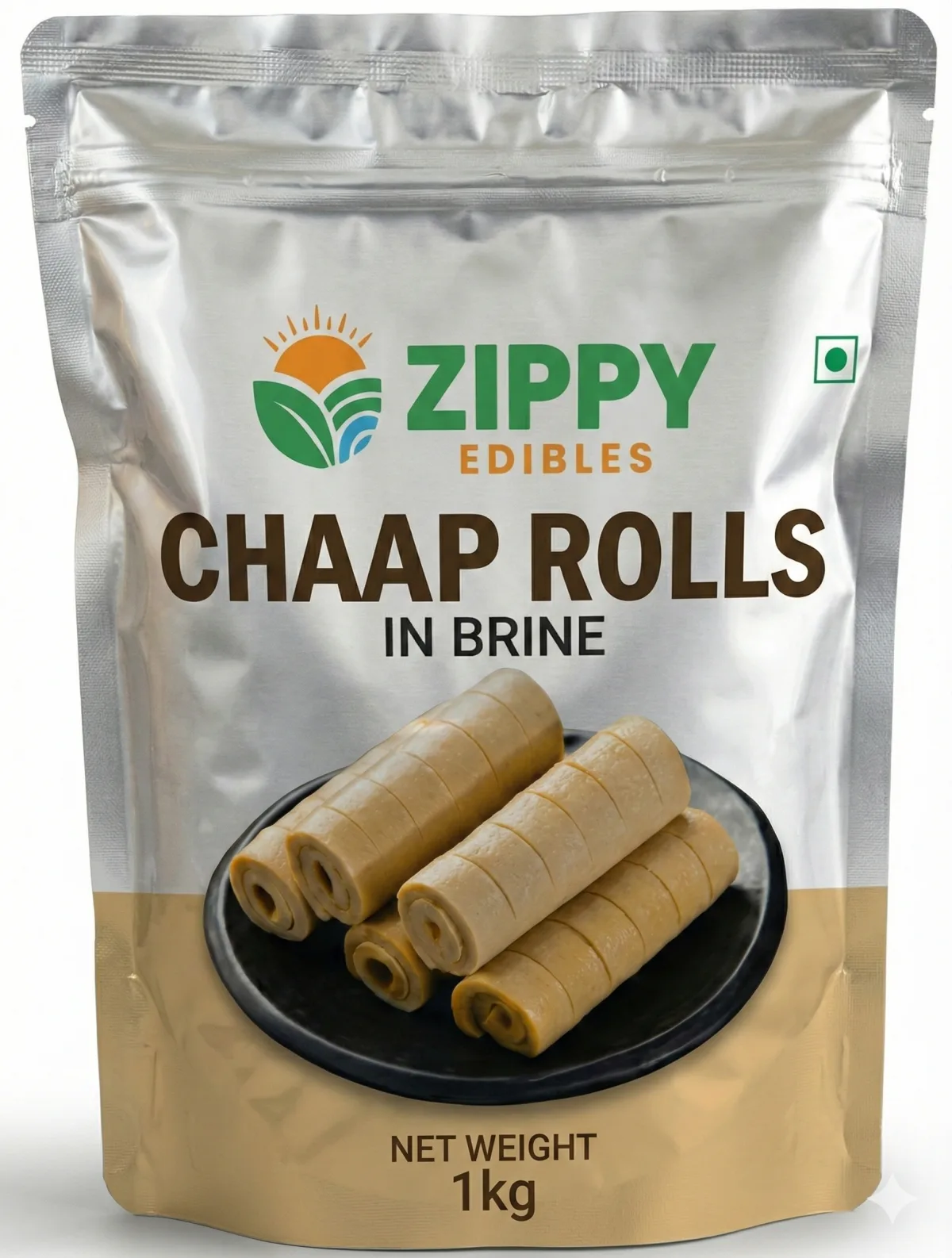 Representative image
2.
Marinated Chaap (Retort Pouch)
Retort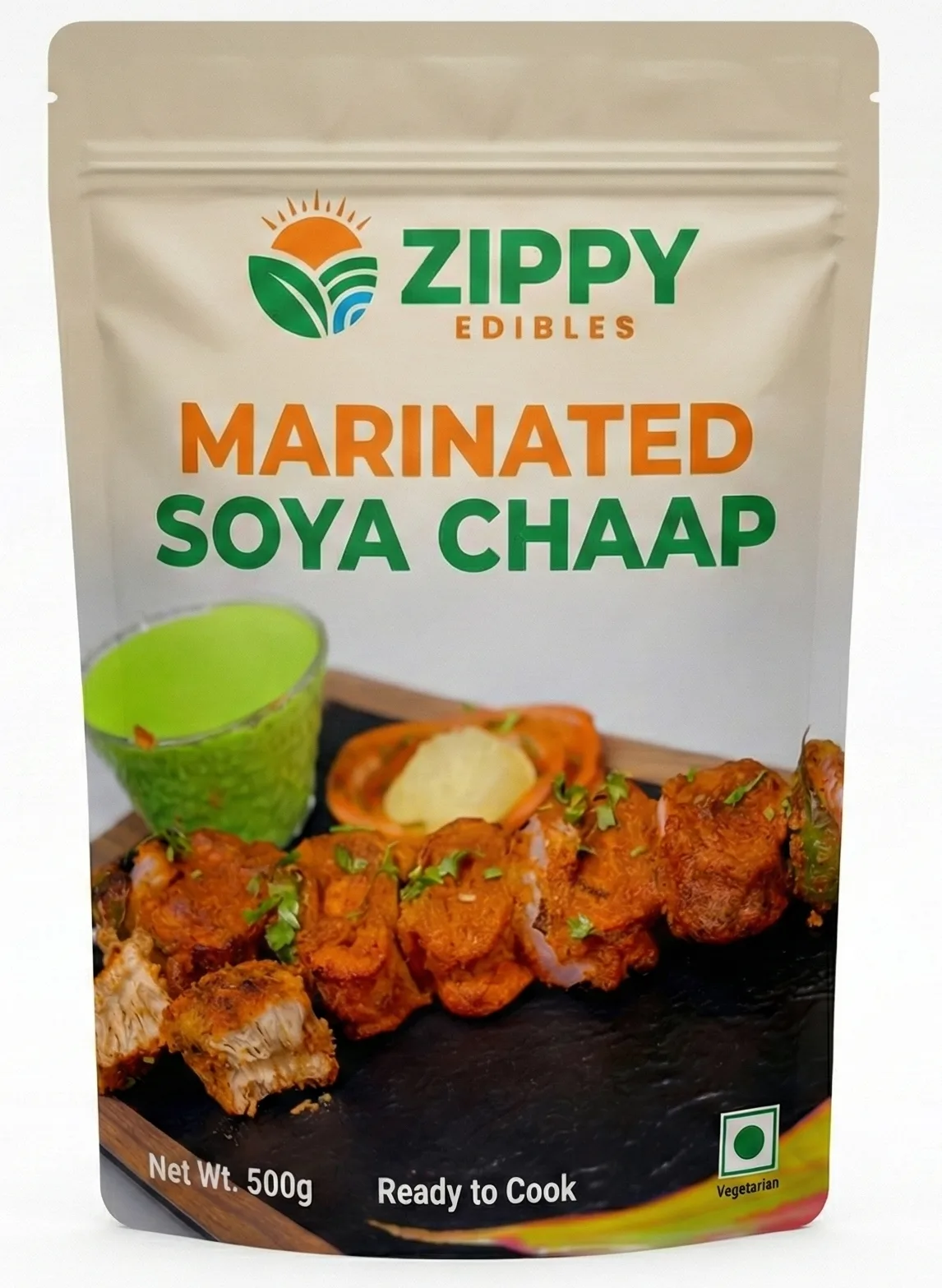 Representative image
How it's made
From flour to frozen pack, in one plant
Eight steps, all from our line at Rudrapur. No step needs anyone to wrap or shape the chaap by hand.
- Weighing feeders and extruder on Zippy's chaap line
Weighed in by feeders
Soy and wheat protein go into the extruder through weighing feeders, with water. No maida goes in, and nobody kneads a dough.
- Continuous chaap protein sheet coming out of the cooling die
Extruded as one sheet
Heat and pressure line the protein up into fibres. It comes out of the extruder as one continuous sheet.
- Protein sheet being sliced and rolled into chaap on Zippy's patented line
Rolled and glued by our own line
Our line slices the sheet, rolls it and glues it, so the roll holds its shape on its own. Patents #568286 and #597337.
- Cut chaap rolls moving through the line in food-grade crates
Cut to size
Rolls are cut to length or into tikka pieces and move on by belt and crate. There is nothing to pull out.
- Par-cooked chaap pieces on a stainless mesh belt
Par-cooked on a moving belt
Par-cooked formats go through on a continuous belt, so they reach your kitchen with colour already on them.
- Racks of chaap going into the blast freezer
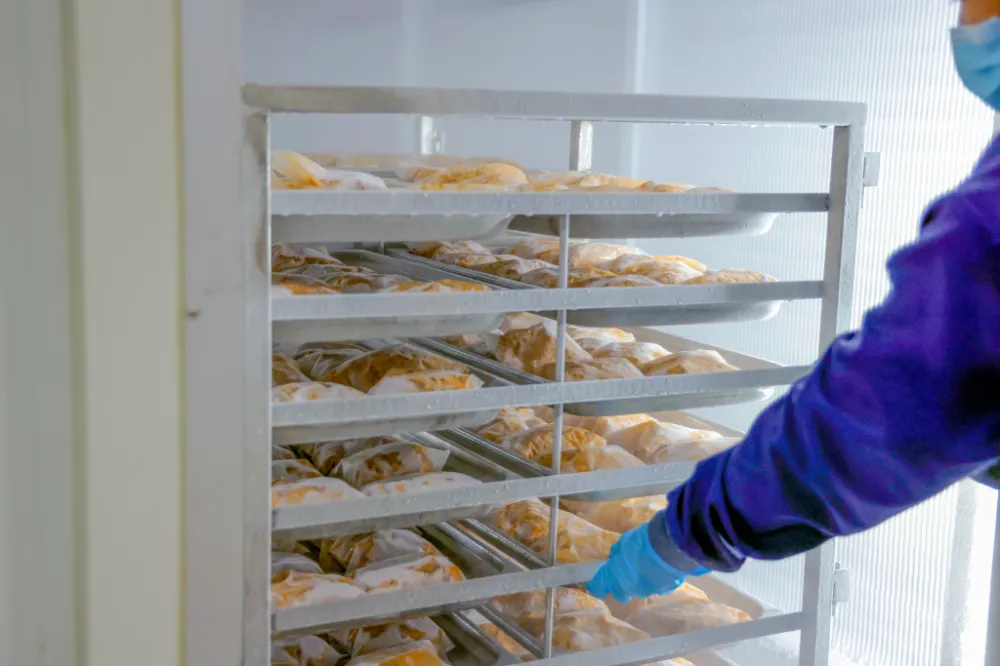
Into the blast freezer
Racks go straight into the blast freezer. Canned and retort chaap is sterilised in the pack instead.
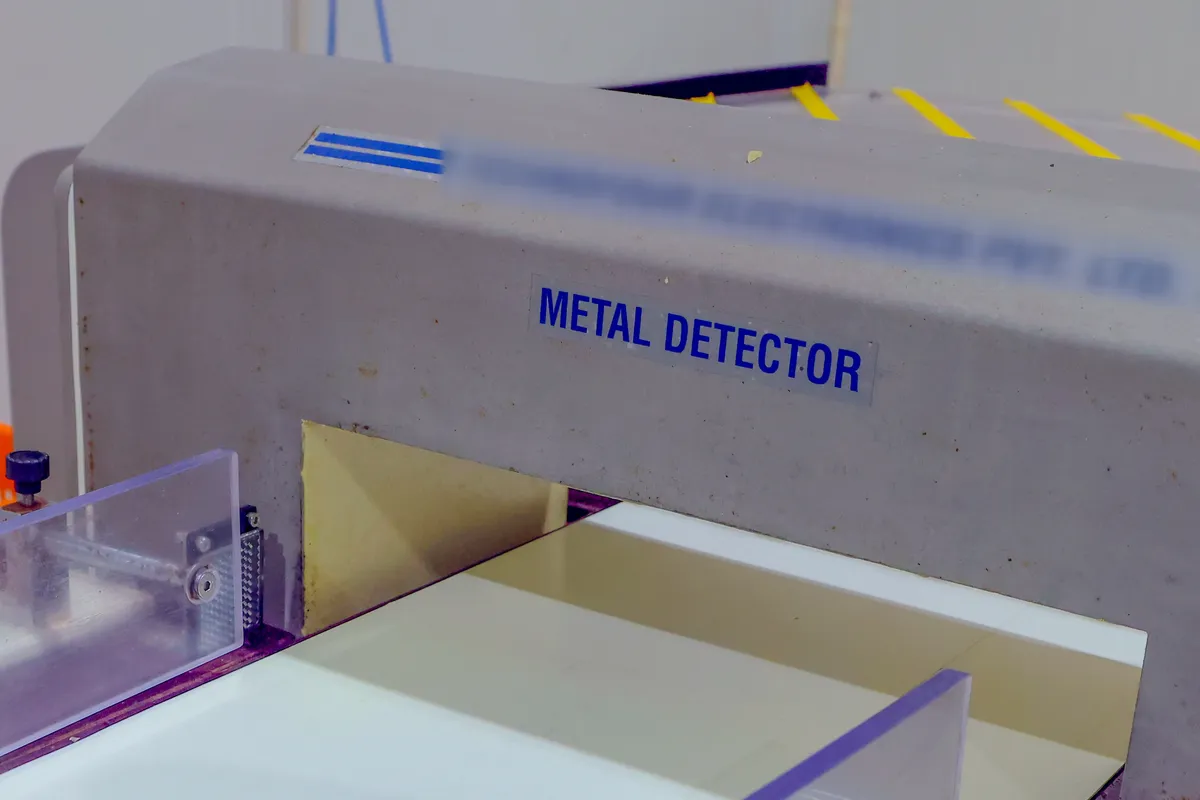
Metal-checked before boxing
Frozen chaap passes a metal detector before it is boxed. It is a critical control point in our food-safety plan.
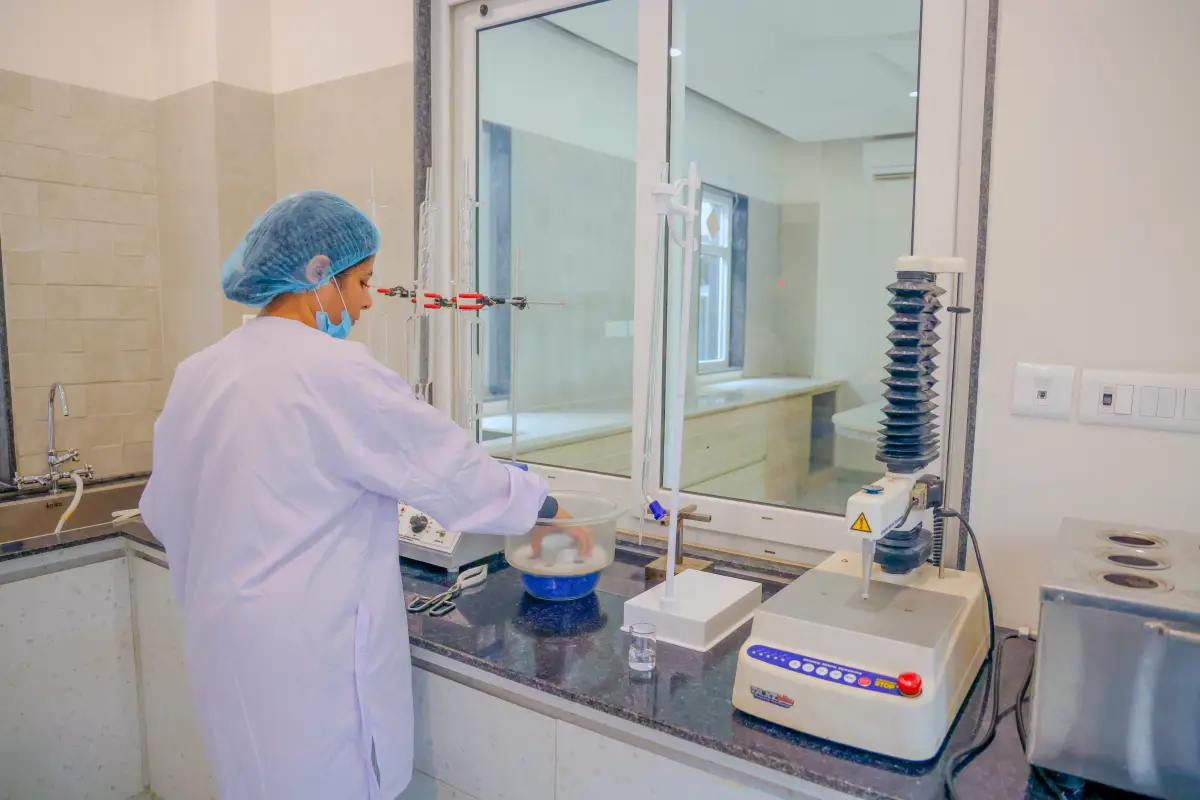
Tested and released by QA
Our QA team tests production samples in our in-house lab and signs off each day's batches.
What's different
Two ways to make chaap
Traditional chaap is a dough wrapped by hand around a stick. Ours is held together by protein instead of maida, and a machine rolls it from an extruded sheet. Here is what that changes.
Base
Traditional chaap
Soy dough, often with maida (refined wheat flour) as the binder
Zippy chaap
Soy and wheat protein, no maida; over half soya on a dry basis
Protein (as sold)
Traditional chaap
Depends on the recipe
Zippy chaap
About 20 g per 100 g in plain rolls
How it's shaped
Traditional chaap
Dough wrapped by hand around a wooden or bamboo stick
Zippy chaap
Protein extruded as a sheet, then sliced, rolled and glued by machine
What holds the shape
Traditional chaap
The stick, while it is steamed or boiled
Zippy chaap
The roll itself, glued on our line
What you weigh and pay for
Traditional chaap
Chaap plus the stick, sold by weight
Zippy chaap
No stick in the weight
In the kitchen
Traditional chaap
Pull the stick out, then cut
Zippy chaap
Straight to the board, or buy it already cut as tikka
In your kitchen
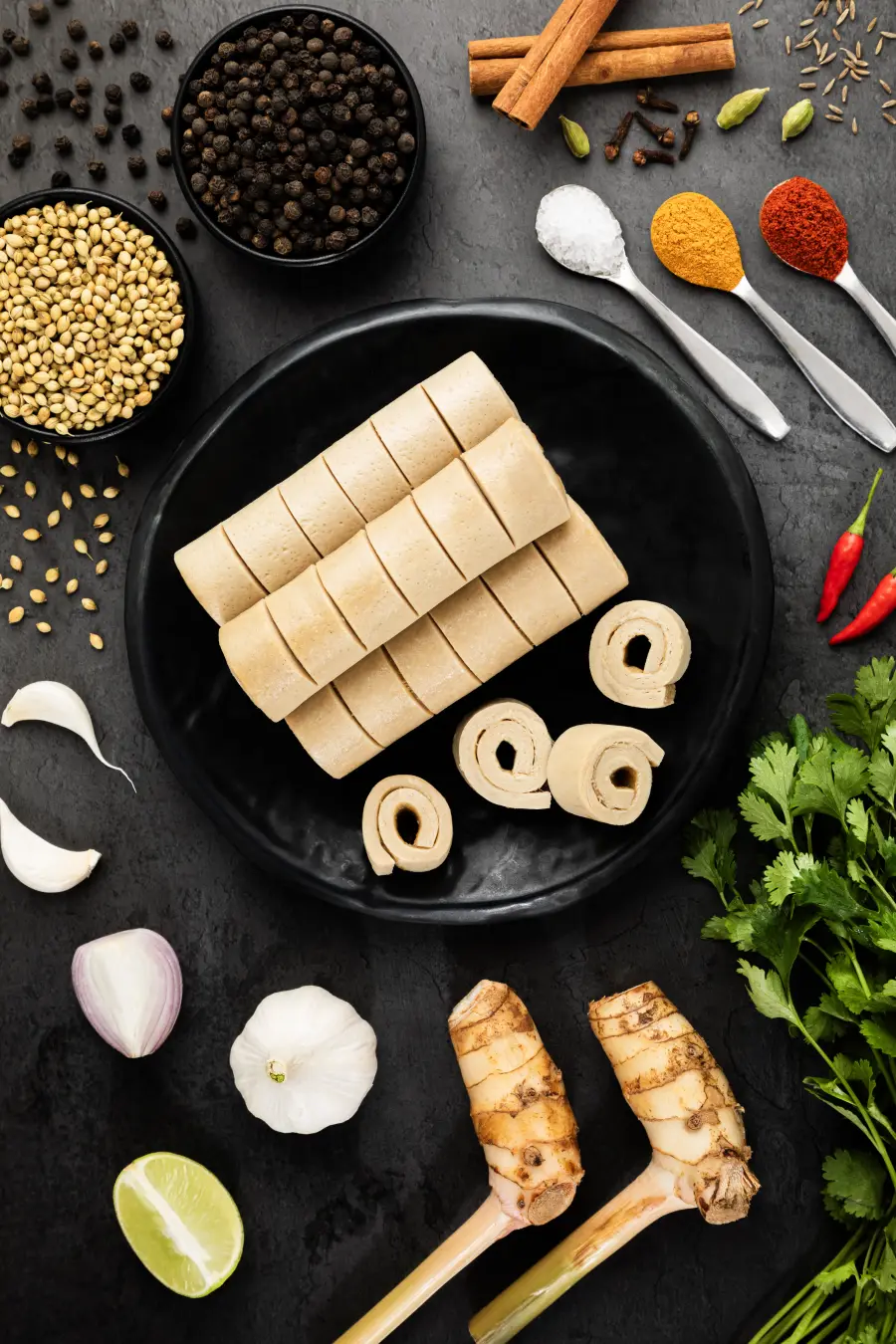
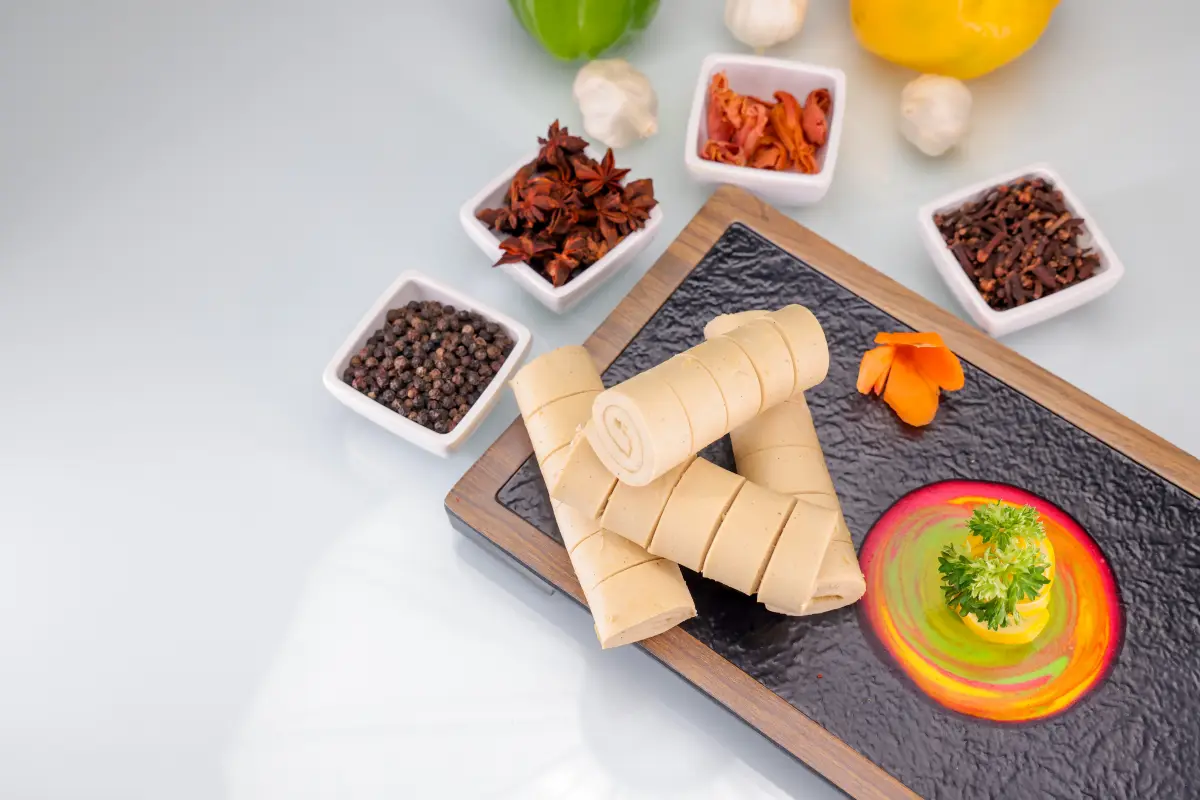
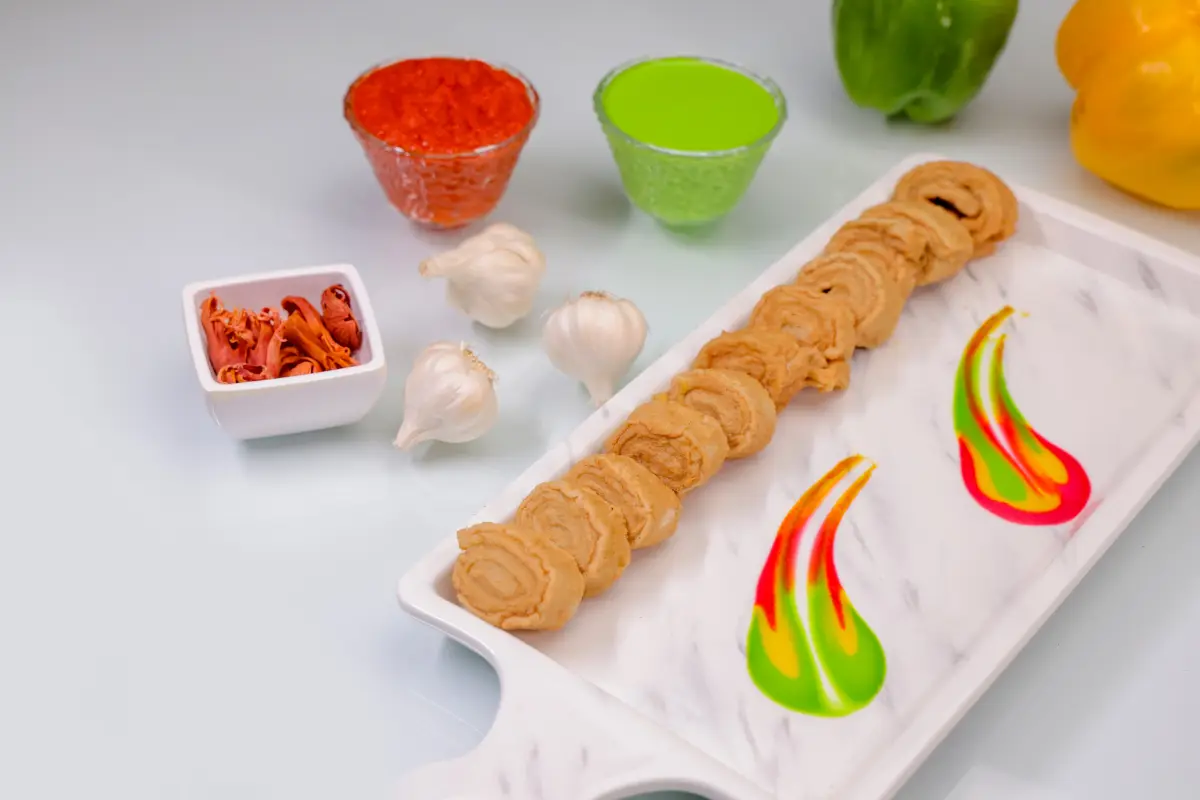
What lands in your kitchen
A plain roll about 30 to 35 mm across, or tikka cuts. Frozen for 18 months, or in retort pouch and can for 24 months without a freezer.
- yield in our cook test
- 97%
- to cook
- 1 min
- oil taken up in our cook test
- 7%
- frozen shelf life
- 18 months
Our own R&D measurements on our chaap. Ask for the method with your samples.
Field note
Why we took the stick out
How the line came about, and what kitchens actually do with chaap.
Read the field note →Cut it the way you normally would and see. We'll send frozen samples with the spec.
Request samplesHygiene
Hygiene you can check
We'd rather show you than ask you to trust us. These are the controls a buyer's auditor asks about.
Shaped by machine
Our extruder and our own rolling line form the chaap. Nobody wraps or shapes it by hand.
No stick, no wood in processing
Our chaap has no stick, and our QA team keeps wood out of the processing area altogether.
Cleaning logged every shift
Equipment cleaning and sanitising is logged shift by shift in our QA app.
Lab results on the spec sheet
Our canned chaap's nutrition and microbiology lab results are published on its spec sheet, under Specs below.
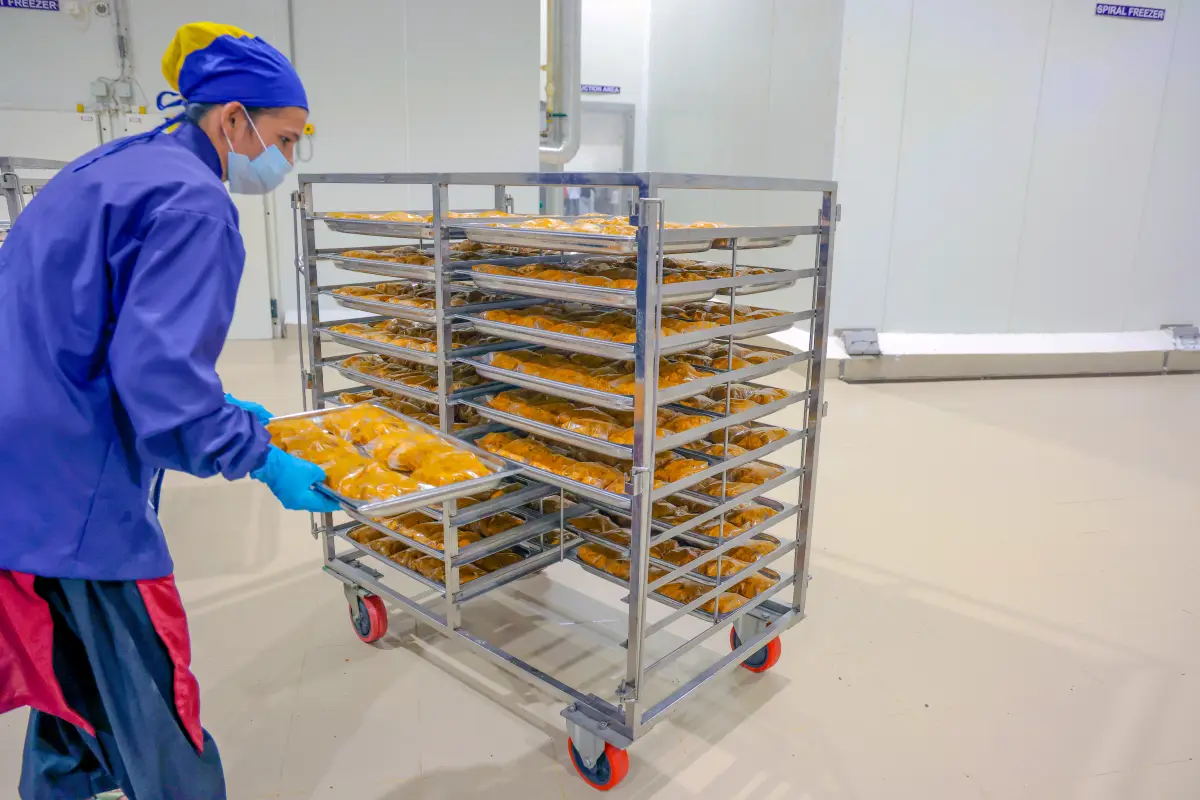
Loading trays for the blast freezer 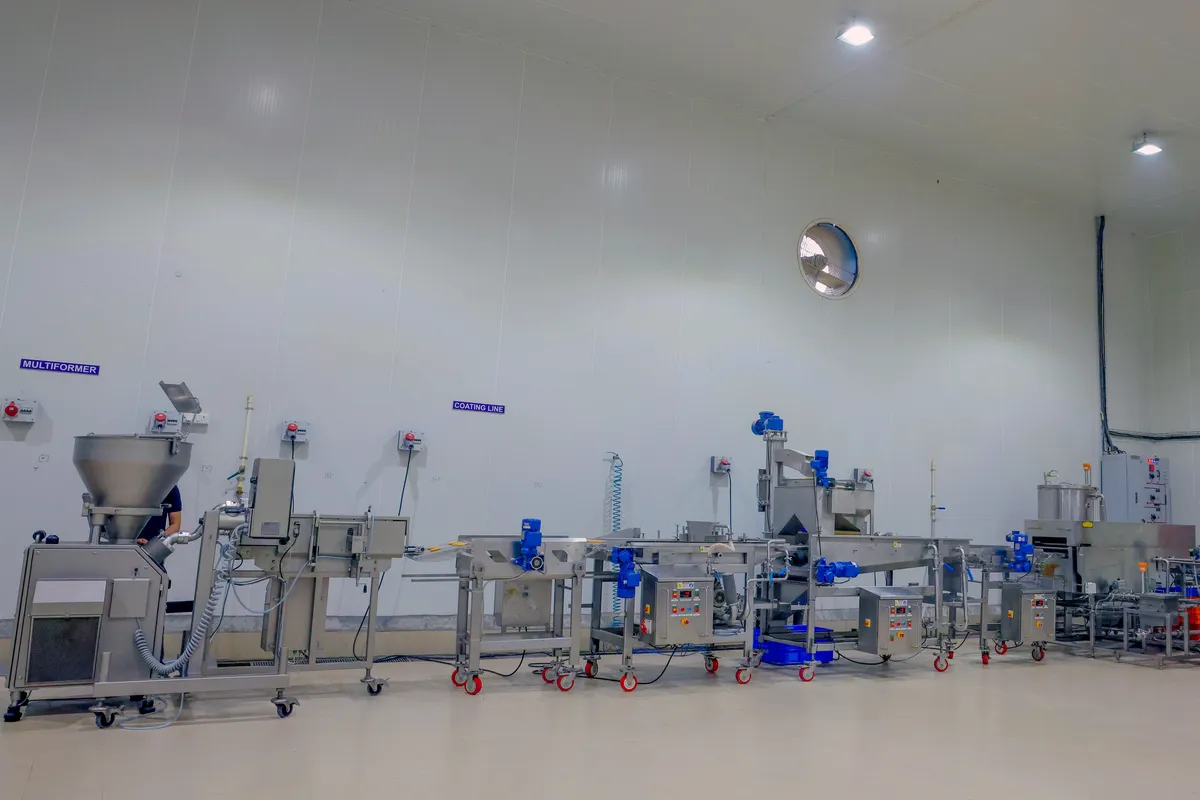
Rudrapur plant floor

FSSC 22000 certified. Audited every year by Intertek.
Intertek India is a NABCB-accredited certification body (accreditation FS 010).
Covers: Frozen ready-to-cook foods: textured soya protein, soya chaap, marinated chaap, soy mince, kebabs, and coated and uncoated products
Reg. 0212626 · valid until 07 May 2028 · FSSAI licence 12623999000092
Know more
Formats, specifications, cost per kg and the questions buyers ask us most.
Zippy Edibles makes soya chaap on its twin-screw high-moisture extrusion line at Rudrapur, Uttarakhand. Our chaap is 100% maida-free, and the base is more than half soya on a dry basis. Available frozen (18-month shelf life) or shelf-stable in canned and retort pouch formats (24-month ambient shelf life). Contract manufacturing (co-packing) and private label services for QSR chains, retail brands, D2C companies, and export markets.
Why Choose Zippy as Your Soya Chaap Manufacturer
Twin-Screw HMMA Line
Twin-screw high-moisture extrusion line at Rudrapur, built around a German extruder. A continuous process with in-house QC.
Zero Maida, Soy-Led Base
Our proprietary formulation uses no refined flour. The base is more than half soya on a dry basis.
Frozen + Shelf-Stable Options
Choose frozen for domestic supply or retort/canned for export. 24-month ambient shelf life eliminates cold chain dependency.
Proven at Scale
Supplying a national QSR chain and frozen-food brands, on 10 MT/day extrusion capacity.
The Economics of Maida-Free Chaap
Our own numbers, in our cook test
| Metric | Zippy TexPro Chaap (in our cook test) |
|---|---|
| Yield After Searing | 97% |
| Cook Time | 1 minute |
| Oil Absorption | 7% |
| Oil Cost | Rs 10/kg |
Figures from our cook test on the seared product.
Brands we supply
Available Formats
Same product, multiple formats. Pick the one your channel needs.
10 MT/day retort capacity, no cold chain required
Soya Chaap Manufacturing Specifications
| HMMA Extruder | twin-screw HMMA extruder (Germany) |
| Extrusion Capacity | 10 MT/day |
| Retort Capacity | 10 MT/day, ambient-stable pouches and cans |
| Marination | Vacuum tumbler + industrial ovens |
| Automation | Machine-formed chaap line |
| Soy Content | >50% soya on dry basis (maida-free) |
| Shelf-Stable Formats | Retort pouch and canned (24-month shelf life) |
| Cold Storage | 250 MT frozen storage capacity |
| Freezing | IQF spiral freezer + trolley blast freezer |
| MOQ | 1 MT pilot; full truck for regular frozen supply |
| Lead Time | 2 weeks standard, 3-4 weeks custom |
| Certifications | FSSC 22000, FSSAI Licensed |
Canned Soya Chaap - full data sheet
ZE-SC-CAN-800G · v1.1 · October 2026. Ingredients, lab-tested nutrition, packaging and micro standards - published openly.
Soya Chaap Manufacturing FAQ
How is Zippy soya chaap made?+
What is HMMA extrusion and why does it matter for soya chaap manufacturing?+
Do you manufacture shelf-stable soya chaap for export markets?+
What is the MOQ and lead time for soya chaap contract manufacturing?+
Does Zippy offer private label soya chaap manufacturing?+
Is soya chaap healthy?+
What is maida-free soya chaap and why does it matter?+
Who manufactures soya chaap for brands in India?+
What cooking yield does Zippy HMMA chaap give?+
How does soya chaap compare to chicken in protein content?+
Related Industry Guides
Industrial Soya Chaap Manufacturing: How Chaap Is Made, Two Methods
Technical guide to HMMA extrusion and traditional soya chaap production methods.
Read Guide →Plant Protein Manufacturing in India
Guide to HMMA and dry TVP processes, and shelf-stable plant protein formats.
Read Guide →Private Label Food Manufacturing in India
How to choose a contract manufacturer in India - certifications, MOQ, lead times, and what to look for.
Read Guide →Used in these Solutions
Buyers find soya chaap through these problem-framed paths.
Solution
Plant Protein Menu at Scale
HMMA chaap, kebabs, patties, popcorn. Frozen, retort, ingredient - each made to its own formulation, in the format your channel needs.
Solution
Shelf-Stable Ready Meals
Instant dry rice. Retort chaap in pouches and cans. Quick-cook pasta. No freezer at destination.
Ready to Get Started?
Whether you need bulk supply, custom formulations, or private label packaging, we can help. Pilot trials available.