The Plant Protein Landscape in India
India's plant protein market is one of the fastest-growing food segments, driven by health consciousness, vegetarian/vegan demand, and the entry of QSR chains into plant-based menus. But the market reality is different from what most people assume.
The Cost Reality
Plant protein products manufactured in India are cheaper than chicken nuggets at comparable quality levels. This is not "approaching price parity" - it is already a cost advantage. The economics:
- Raw material: Soy protein flour is significantly cheaper than chicken on a per-kg protein basis.
- Manufacturing location: Indian production costs are a fraction of US/European plant protein manufacturing.
- Yield: HMMA extrusion has near-100% yield vs significant losses in chicken processing.
- Shelf life: Plant protein in retort/canned format has 24-month ambient shelf life. Chicken requires cold chain.
This cost advantage makes Indian plant protein competitive not just domestically but for export markets where plant protein pricing has been a barrier to mass adoption.
HMMA vs TVP vs Traditional: Technology Comparison
| Parameter | HMMA Extrusion | TVP / Dry Extrusion | Traditional (Hand-Made) |
|---|---|---|---|
| Texture | Fibrous, layered, meat-like | Spongy, uniform | Variable, dough-like |
| Protein content | 25-35% (50%+ dry basis) | 50-70% (dry, before rehydration) | 12-18% |
| Moisture during processing | High (50-70%) | Low (15-25%) | Variable |
| Equipment | Twin-screw extruder + cooling die | Single or twin-screw extruder | Manual / basic machinery |
| Consistency | Batch-to-batch identical | Good | Variable |
| Scalability | 8-10+ MT/day per line | Higher throughput | Labour-dependent |
| End use | Chaap, nuggets, patties, kebabs, mince | Soy chunks, granules, TVP | Traditional chaap |
| QSR suitability | Yes - required by major chains | Limited - mostly B2B ingredient | No - too inconsistent |
| Shelf-stable option | Retort/canned (texture holds) | Already shelf-stable (dry) | Poor (texture degrades) |
| Capital investment | High | Medium | Low |
Why HMMA Is Winning
HMMA creates a fundamentally different product from TVP. The high-moisture, high-shear process aligns soy proteins into fibrous layers that shred, tear, and cook like real meat. QSR chains and modern consumers expect this texture. TVP products (soy chunks) serve a different, more commodity market.
HMMA vs TVP: The Economics a Buyer Actually Cares About
The texture difference between HMMA and TVP is well understood. The part most sourcing decisions hinge on is the cost-in-use math, not the headline price per kg of raw ingredient.
Why HMMA Costs More Per Kg But Often Less Per Serving
TVP (dry soy chunks and granules) has a lower price per kg because it ships dry. But it has to be rehydrated, loses structure in long cooks, and does not hold a meat-like bite. HMMA arrives hydrated and pre-cooked through extrusion, and the cost advantage shows up in yield and oil:
- Cooking yield: Zippy HMMA soya chaap holds far more of its weight on cooking than traditional hand-made chaap or TVP. Because the moisture is bound into the fibrous protein structure rather than loosely held, there is much less cook-loss and shrink - so more sellable plate weight per kg bought.
- Oil absorption: Noticeably lower oil pickup than market chaap. Lower oil cost per portion, and a cleaner label.
- Cook time: Finishes far faster than raw or hand-made chaap, because the protein is already heat-set during extrusion. Faster line throughput in a QSR or cloud kitchen.
- Protein delivered: More protein per 100g than maida-bound market chaap, so the protein-claim cost per gram is lower than the raw price suggests.
The Bigger Picture: Cheaper Than Chicken
Soy protein flour is significantly cheaper than chicken on a per-kg-protein basis, and Indian manufacturing cost is a fraction of US or European plant-protein production. The result is a finished product that is already cheaper than chicken nuggets at comparable quality, not approaching parity. For a brand or QSR, that is the number that moves a category from niche to mainline menu.
B2B Protein Ingredient vs Finished Snack: Which Are You Buying?
The same HMMA platform serves two completely different buyers, and the sourcing conversation is different for each. Knowing which side you are on saves weeks of back-and-forth.
B2B Protein Ingredients (You Formulate the Final Product)
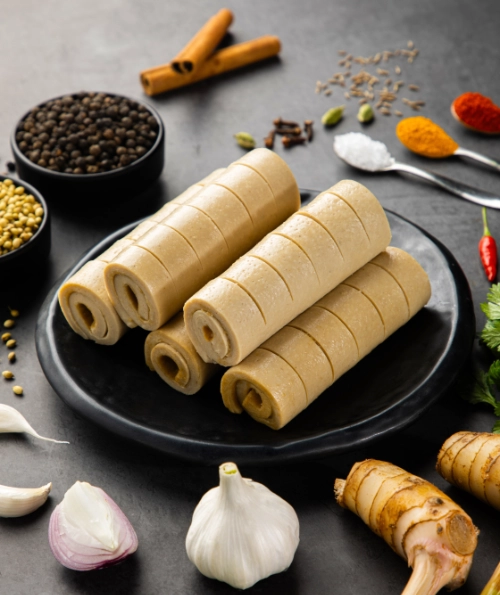
Bulk HMMA cuts supplied for you to season, form, coat, or blend into your own recipe: keema mince, shawarma shreds, protein slices, chunks, plain whole-muscle chaap rolls. Used by meat-analogue brands, ready-meal manufacturers, and meat processors. The layered fibrous structure cooks and bites like meat rather than the spongy uniform texture of commodity TVP. Supplied in bulk cartons or food-grade sacks, with custom blends and inclusion ratios available.
Finished Frozen Snacks (Retail or Foodservice Ready)
Fully developed, coated, cooked, and frozen products that carry your brand and go straight to the freezer aisle or the QSR kitchen: nuggets, kebabs, patties, drumsticks, popcorn bites, tandoori fish, cheese balls, veg protein steak. Batter, breading, seasoning, and shape are developed per customer on a coating-and-frying line.
Why Sourcing From One Manufacturer Matters
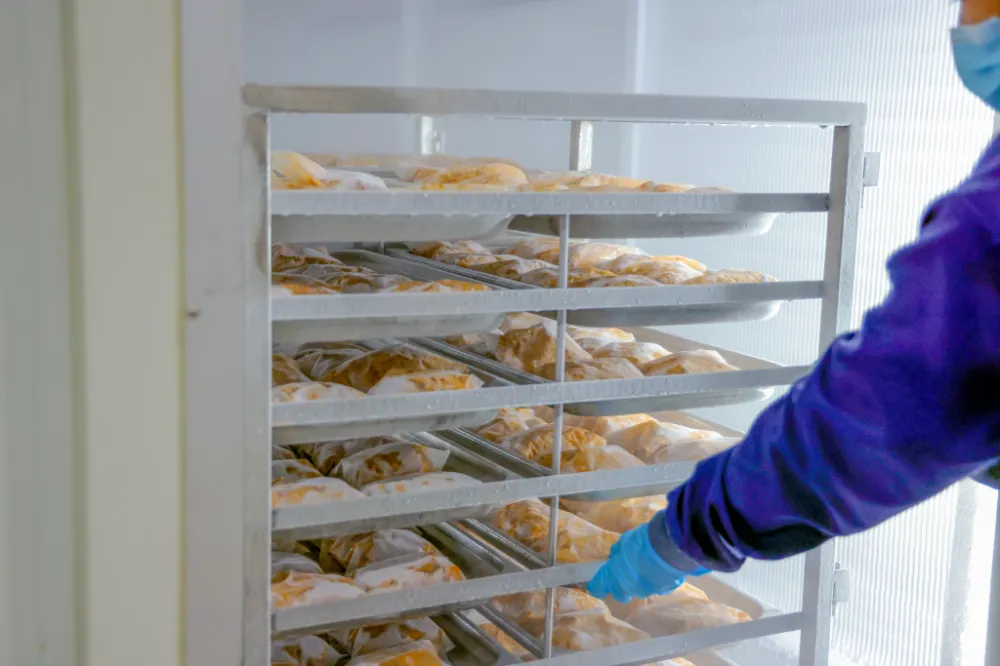
Most suppliers do one or the other. A manufacturer running the extruder and the downstream forming, coating, frying, and freezing under one roof can take you from a bulk ingredient trial to a finished private-label SKU without changing vendors, and the protein base stays identical across both.
Shelf-Stable Plant Protein: What Works and What Doesn't
Shelf-stable plant protein eliminates cold chain dependency, opening up export markets and tier-2/3 city distribution. But not all formats work equally well.
Proven Shelf-Stable Formats
- Canned soya chaap: HMMA chaap in brine or marinade. 24+ month shelf life. The HMMA texture withstands retort processing well because the protein structure is already heat-set during extrusion.
- Retort pouch chaap: Same concept as canned, in flexible pouch format. Lighter packaging, easier retail display. 24-month shelf life.
- Marinated retort chaap: Pre-marinated in tandoori, achari, malai, or custom flavours. Heat-and-eat convenience.
Formats Still Being Proven
- Whole muscle products (nuggets, kababs, drumsticks): Retort processing for these formed products is still being optimized. The coating and forming may not hold up equally well under retort conditions compared to whole chaap pieces. More trials needed before making shelf-stable claims for these formats.
- Complex multi-component products: Products with multiple textures or coatings need individual validation for retort compatibility.
The honest position: Shelf-stable plant protein works best with simpler formats (chaap pieces in sauce/brine). More complex formed products (breaded nuggets, multi-layer kebabs) need additional R&D before shelf-stable claims can be made confidently.
Market Opportunity
- Domestic QSR: Major chains adding plant protein to menus. They require HMMA-grade consistency at scale.
- Retail frozen: One of the fastest-growing frozen food categories. D2C brands driving awareness.
- Export (frozen): South Africa, UAE, Egypt, and growing. Cold chain infrastructure improving in key markets.
- Export (shelf-stable): Retort/canned format eliminates cold chain. Opens markets where frozen distribution is unreliable. Significant untapped opportunity.
- Institutional: Airlines, railways, hotels, catering companies standardizing plant protein offerings.
- B2B ingredient: Keema mince, protein slices, chunks as ingredients for other food manufacturers and QSR kitchens.
Scale Matters
The plant protein market in India rewards scale. Good scale has been achieved with products like soy chop and other high-volume items. Manufacturers with both frozen and shelf-stable capability, plus the HMMA technology to produce QSR-grade product, are best positioned to capture the growth.
Plant Protein for QSR and Cloud Kitchens
QSR chains and cloud kitchens are the fastest-moving buyers of HMMA plant protein in India, because plant protein solves a specific operational problem: a single vegetarian SKU that behaves like meat on the line, holds through delivery, and needs no cold-chain-sensitive raw handling.
Where It Fits on the Menu
- Pizza toppings and stuffed crust: seekh and mince formats as veg protein toppings or in-crust fillings, with consistent shape and weight for automated assembly.
- Rice bowls: tikka and chunk formats hold on hot-hold counters and rehydrate marinade cleanly through fibrous HMMA layering, so the bowl looks and eats the same after a delivery ride.
- Biryani add-ons: plant seekh as the vegetarian protein on a biryani plate, where the alternative is usually paneer or egg.
- Rolls and wraps: seekh as a veg roll filling alongside an existing non-veg lineup, and fine-cut shreds for shawarma-style wraps.
Why HMMA, Specifically, for Delivery
Delivery is the stress test. Spongy TVP and inconsistent hand-made chaap fall apart, weep, or go rubbery on a 30-minute ride. HMMA holds structure because the fibres are heat-set during extrusion. For a chain standardising across hundreds of outlets, batch-to-batch identical product is the requirement, not a nice-to-have.
One Protein, Multiple Cuts
A single lightly-marinated chaap base can be cut three ways at the kitchen: tikka for gravies and rolls, fine-cut for shawarma, and sheet or butterfly for niche formats. One ingredient, multiple menu items, one spec to manage.
Choosing a Plant Protein Manufacturer
- HMMA capability: Does the manufacturer have a real HMMA line (twin-screw extruder with cooling die)? Or are they relabeling TVP as "plant meat"?
- Equipment: European twin-screw extruders are the benchmark. The cooling die design determines final texture quality.
- Downstream line: Cutting, forming, coating, marination, and freezing infrastructure matters as much as the extruder itself.
- Frozen + shelf-stable: Can the manufacturer do both? Retort/canning capability opens export markets.
- Certifications: FSSC 22000 is minimum for QSR and export. FSSAI is legally required.
- R&D: Pilot extruder for trials. Custom formulations for your brand.
- Protein content: Ask for the actual soy protein flour percentage on dry basis. 50%+ is the benchmark for quality HMMA products.