Why Private Label Food Manufacturing?
Private label (also called contract manufacturing, co-packing, or toll manufacturing) lets brands focus on marketing, distribution, and customer relationships while using a manufacturer's production expertise, equipment, and certifications. In India's growing food market, this model is the fastest path from concept to shelf.
The Business Case
- Capital efficiency: No factory investment. Pay per unit produced. Redirect capital to brand building and distribution.
- Speed to market: From concept to retail-ready product in 4-8 weeks. Building a factory takes 12-18 months.
- Technical access: European equipment, food technologists, R&D labs, and pilot lines - capabilities that would cost crores to build internally.
- Flexibility: Test new products without committing to production lines. Scale up or down based on demand.
- Multi-category play: A single manufacturer covering pasta, protein, rice, and specialty ingredients simplifies procurement and vendor management.
What to Look for in a Contract Manufacturer
1. Certifications
- FSSC 22000: The GFSI-recognized food safety standard. Required by most organized retail chains and modern trade. Non-negotiable for serious brands.
- FSSAI License: Legally required in India. Verify it covers the specific product categories you need.
- For export buyers: If you plan to sell internationally, your manufacturer should have experience with destination country requirements. US export requires FDA facility registration. EU export requires compliance with EU food safety regulations. These are important considerations when selecting a manufacturer for export-bound products.
2. Capacity & Equipment
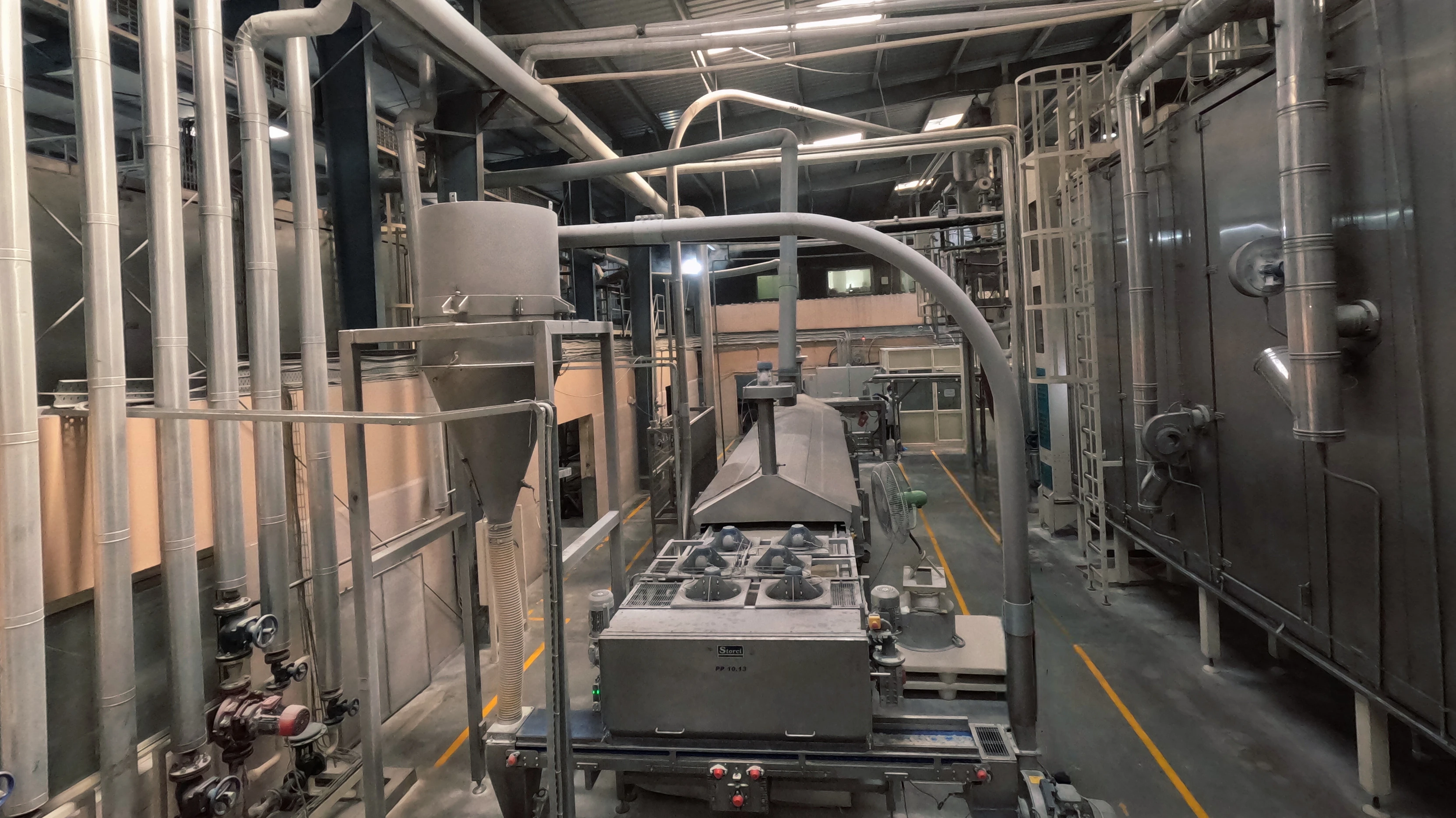
- Equipment origin: European equipment (Pavan (GEA) pasta lines, German twin-screw HMMA extruders) delivers more consistent results than local alternatives for most product categories.
- Multiple lines: Enables parallel production of different SKUs. Faster turnaround and shorter lead times.
- Scale headroom: Can the manufacturer grow with you? If you are building a brand, you need capacity that handles 10x your current volume.
3. R&D Capability
- Pilot equipment: Critical for testing new formulations at small scale (50-100 kg) before committing to full production.
- In-house milling: Manufacturers who mill their own flour have better ingredient quality control and can handle specialty grains.
- Food technologist on staff: For formulation development, troubleshooting, and process optimization.
4. Quality Systems
- In-house laboratory: For real-time quality testing during production. External lab testing adds delays.
- Batch traceability: Full traceability from raw material to finished product. Essential for recalls and compliance.
- Testing frequency: Understand how often they test - per batch for critical parameters, periodic third-party audits, and NABL-accredited lab testing as per FSSAI norms.
5. Product Range
A manufacturer covering multiple categories demonstrates technical breadth:
- Pasta & vermicelli (standard, multi-grain, precooked)
- Plant protein (HMMA soya chaap, formed snacks)
- Specialty rice (FRK, instant rice, high-protein rice)
- Specialty ingredients (pregelatinised flour, rice papad)
Food Categories Available for Private Label
Pasta & Vermicelli
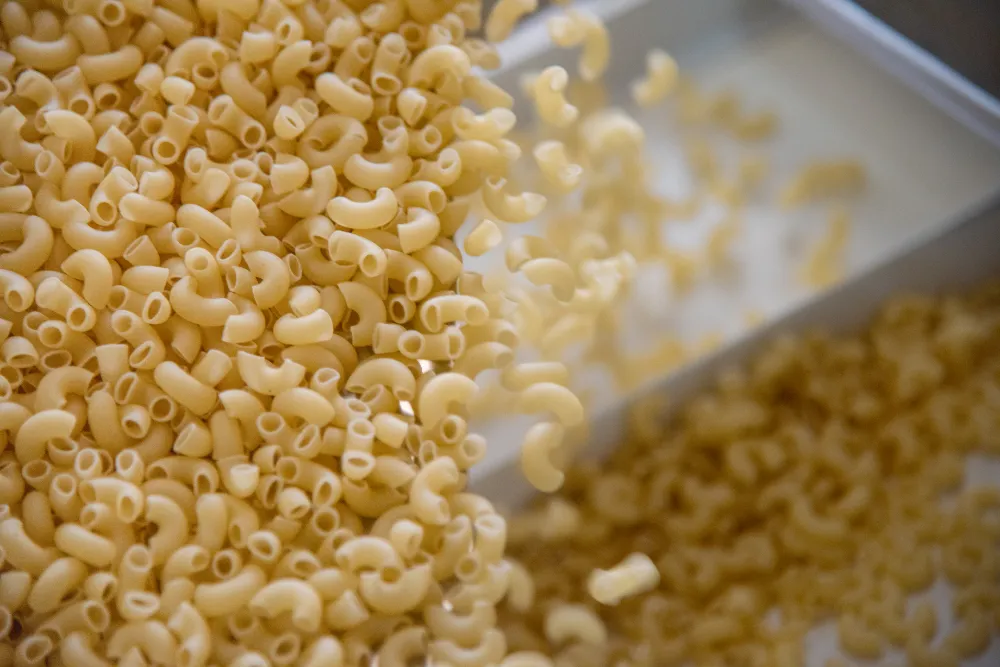
India's pasta market is growing at 15%+ annually. Contract manufacturing options include standard durum/soft wheat pasta, multi-grain and gluten-free formulations (chickpea, besan, millet), precooked/instant pasta for cup formats, and vermicelli (plain and roasted). Multi-grain and specialty pasta is the fastest-growing segment.
Plant Protein
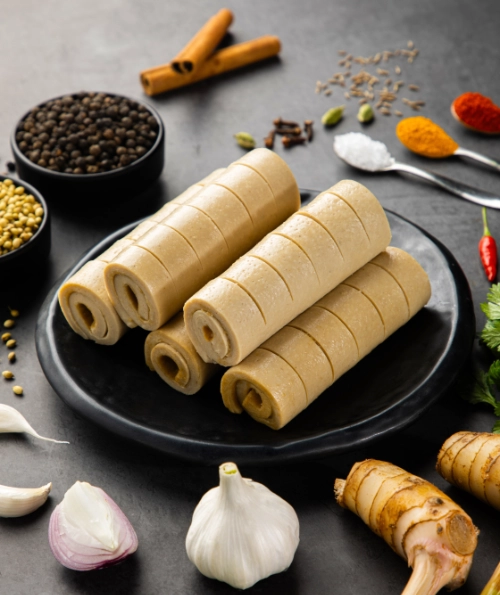
HMMA (High-Moisture Meat Analog) soya chaap, protein snacks (nuggets, patties, kebabs, mince), and formed products. Key advantage: plant protein products manufactured in India are cheaper than chicken nuggets at retail, not just approaching price parity. Frozen and shelf-stable (retort/canned) formats available.
Instant Rice
Ambient shelf-stable instant dry rice via multi-stage cook and dry process. Rehydrates in 3-5 minutes. Multiple grain varieties. Positioned as a domestic alternative to imported freeze-dried rice at lower cost.
Specialty Ingredients
Fortified Rice Kernels (FRK) for government nutrition programs, fortified pulse kernels for dal fortification, pregelatinised flour for bakery and snack applications, and rice papad for the ready-to-fry segment.
Lead Times, MOQ, and Development Process
Typical Timeline
- Week 1-2: Discovery - share requirements, receive existing samples or proposed formulations.
- Week 2-4: Custom development (if needed) - pilot trials, sample iteration, approval.
- Week 3-4: Packaging design and printing.
- Week 4-6: First production run and QC.
- Week 5-7: Dispatch.
For standard products with existing formulations: 2 weeks from order to dispatch.
Typical MOQ
| Product | Standard MOQ | Custom MOQ |
|---|---|---|
| Pasta & Vermicelli | 4 MT | 5 MT |
| Soya Chaap / Protein (frozen) | Full truck (1 MT pilot) | Full truck |
| Instant Rice | 5 MT | 5 MT |
| FRK | 5 MT | Bulk contracts |
| Pilot trials | 50-100 kg (all categories) | |
10 Questions to Ask a Potential Manufacturer
- What certifications do you hold? (FSSC 22000 is the baseline for serious brands.)
- What equipment do you use and where is it from? (European equipment = more consistent quality.)
- What is your actual operational capacity? (Not theoretical - what do you produce daily?)
- Do you have pilot equipment for small-batch trials?
- Do you have an in-house lab? What do you test, and how often?
- Can you handle my packaging (design, printing, filling)?
- What is your MOQ for standard vs custom products?
- What is your lead time for first orders and repeat orders?
- Who are your current customers? Can I get references?
- What categories can you cover? (Multi-category capability simplifies vendor management.)