The number the West keeps celebrating
There is a number the global plant-based industry keeps celebrating, and it quietly tells you how far behind the conversation is. Every few months a report or a conference panel announces that plant-based meat is finally approaching price parity with conventional meat.
Read closer and the benchmark is almost always beef, or red meat in general, the most expensive animal protein on the shelf. And even against that, recent US retail data has plant-based meat sitting around 77% more expensive, sometimes two to three times the price. After more than a decade and billions in funding.
The real benchmark in India
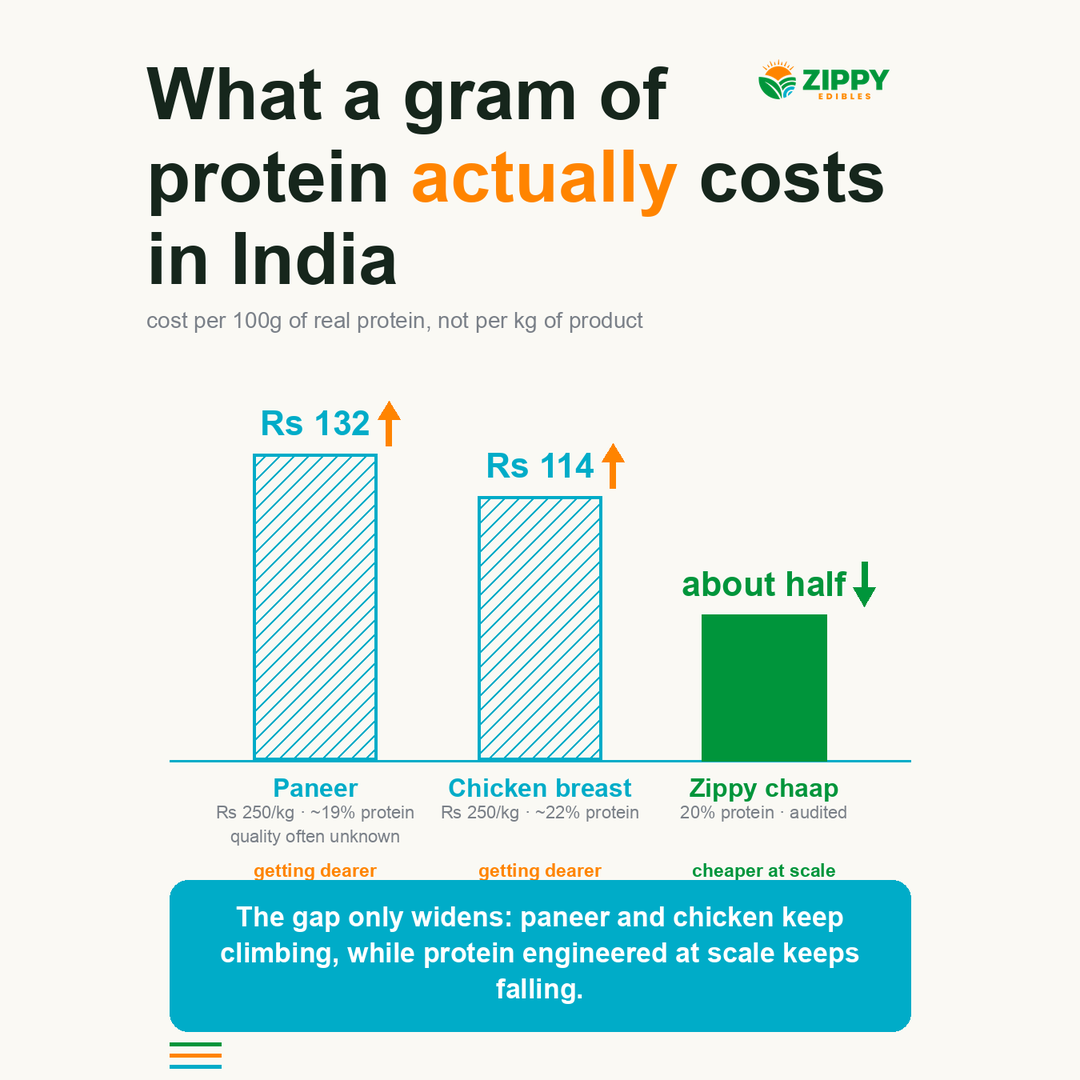
The benchmark that matters here is different. Most of our buyers are weighing protein against paneer, which runs north of Rs 250 a kilo wholesale. Chicken breast sits in the same range, around Rs 250 a kilo at roughly 22% protein.
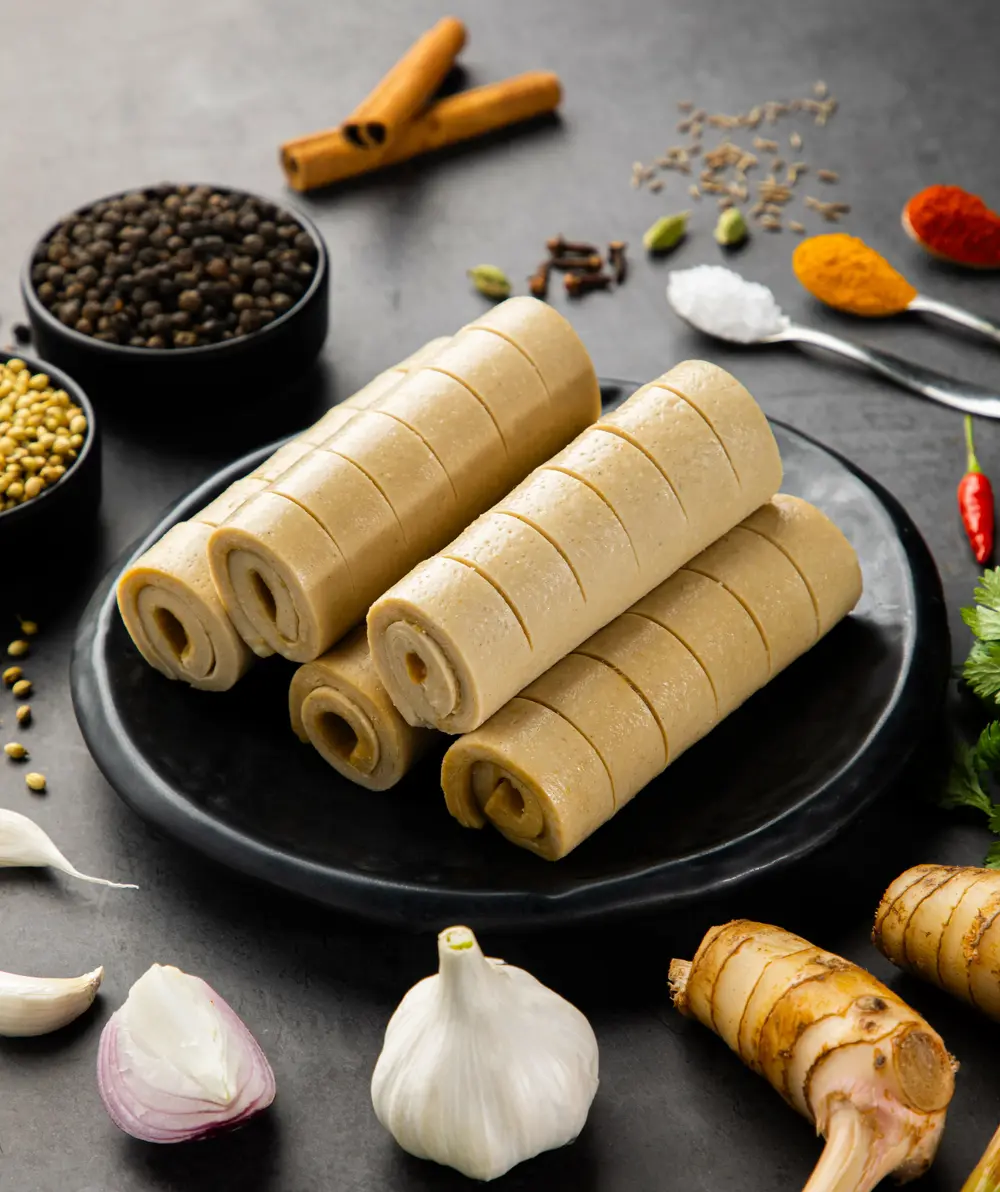
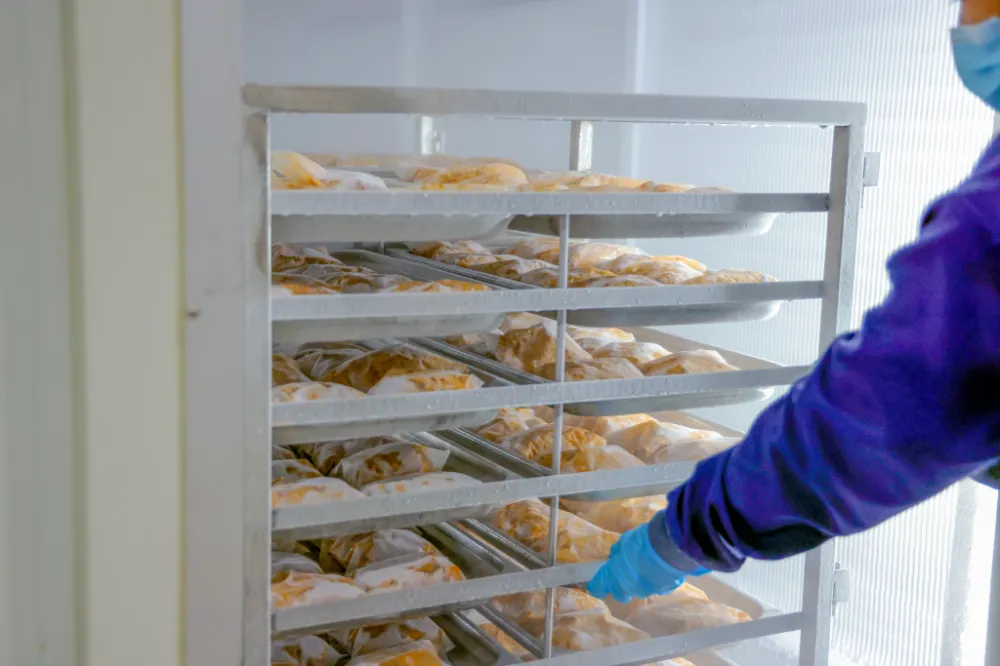
Our chaap comes in at less than half the cost of paneer, gram for gram of protein, and about half the cost of chicken breast whether you measure per kilo or per gram of protein. Every batch is made in an FSSC 22000-certified plant with batch traceability. We are not approaching parity with the expensive thing. We are already under the cheap thing.
How, without it being a trick
How, without it being a trick? We started from the price. The number an Indian chain or household will actually pay for protein is just lower, full stop. So we worked backwards from that target and kept changing the process until the math closed.
Commodity ingredients where they make sense. Manufacturing done here instead of flown in. Yield and oil and throughput ground down batch by batch. The western brands did it the other way round, built on imported isolates and concentrates, the priciest form of the input, stacked brand margin on top, and hoped scale would rescue the price later. I think they optimised the wrong variable.
The gap only widens
Here is the part a single snapshot misses. The two cost lines are moving in opposite directions.
Paneer and chicken keep climbing with feed, land and food inflation. Engineered plant protein keeps falling, because high-moisture extrusion is a continuous process that gets cheaper with scale and with every round of process improvement. We are not pricing for a trend spike. The protein shift here is a long arc, it is not going anywhere, so we are building and pricing for scale, not for one good season of margins. Cheaper at volume is the whole point, not a discount we claw back when the hype cools.
So why this machine? Extrusion already won
People ask why I am so sure extrusion is the right way to make protein, when right now most of the money and most of the headlines are going into fermentation. Fair question, and I have chewed on it more than I would like to admit.
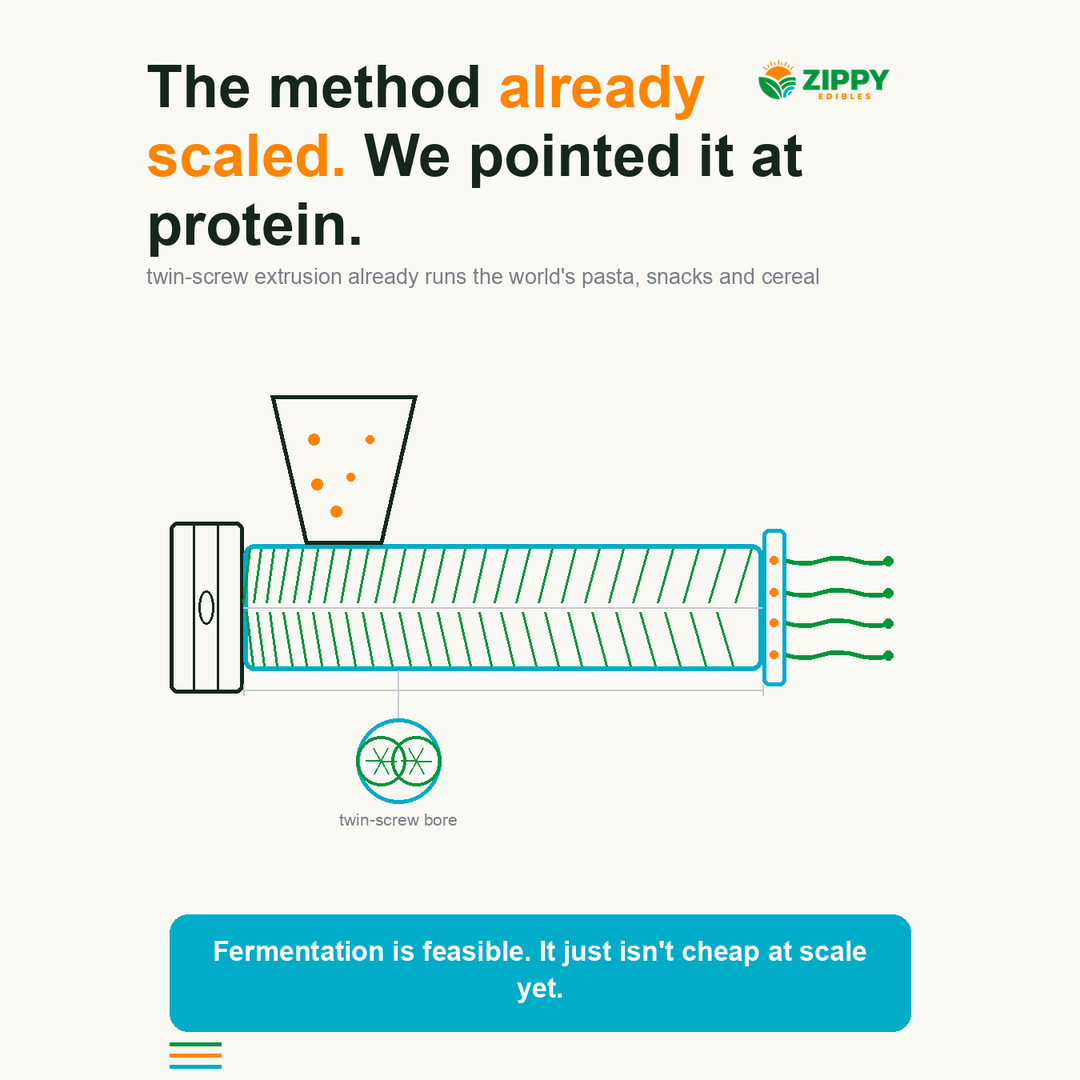
Extrusion already won, decades ago, just not for protein. The twin-screw extruder is probably the most scaled continuous food machine on the planet, the kind of line that runs close to a tonne an hour without stopping. Pasta, snacks, breakfast cereal, all of it comes through one. It takes commodity inputs in one end, and the cost of running it came down a long time ago, because another industry paid for that learning curve first. The same machine was scaled up to process polymers long before food ever borrowed it. We did not have to invent it in a lab. Somebody already had.
Protein is a polymer too
And protein is a polymer too. Long chains, folded up. The same machine that aligns starch and other polymer chains under heat and pressure and pushes them through a die will line up protein chains into fibre and bite. Pasta and chaap are the same physics. Chaap is just the harder version, more moisture and a narrower window to land the texture, but it is the same family of problem, not a different one.
Why not fermentation
Now put fermentation next to that. I am not saying it cannot work. The biomass side of it genuinely will scale. But it is batch, the bioreactors are expensive and have to stay sterile, and biology cheapens slowly. Quorn has been growing mycoprotein since 1985, and forty years on it is still a premium product. Feasible was never the question. Cheap at scale is, and that one takes a very long time to crack.
I could be wrong on the timing, and fermentation might surprise me in ways I cannot see yet. But if the job is feeding a few hundred million people affordable protein this decade, I would rather build on the machine that already feeds the planet than the one still stuck in its expensive years.
And no, it isn't "ultra-processed" frankenfood
People hear extrusion and think ultra-processed, some chemical frankenfood. But it is physical shaping. Heat, moisture, pressure, a shaped hole at the end. It is how pasta has been made for ages, and nobody calls pasta a frankenfood. Shaping a protein is not the same as chemically pulling it apart and rebuilding it.
So that is the bet, and the cost math is the whole point of it. India was never going to win this on a sustainability pitch. It comes down to who can actually make the stuff, cheap and consistent, batch after boring batch. We have been grinding at that for years and I still would not call it solved.
Frequently Asked Questions
How can chaap cost less than paneer per gram of protein?+
Is plant-based meat really more expensive than animal meat?+
Will engineered plant protein stay cheaper as it scales?+
Why extrusion and not fermentation for plant protein?+
Is extruded plant protein ultra-processed?+
Go Deeper
About the author
Sarthak Singhal is a director of Zippy Edibles, writing from the manufacturing side of the business. Before food, he was a mixed-signal and analog chip-design engineer (Intel, Analog Devices) and studied engineering at Georgia Tech. Connect on LinkedIn →