
What Is a Fortified Rice Kernel (FRK)?
FRK means fortified rice kernel. It is a rice-shaped grain made from rice flour and a premix of iron, folic acid and vitamin B12. Rice mills blend 1 kg of FRK into every 100 kg of ordinary rice, and the blended rice cooks and tastes like ordinary rice.
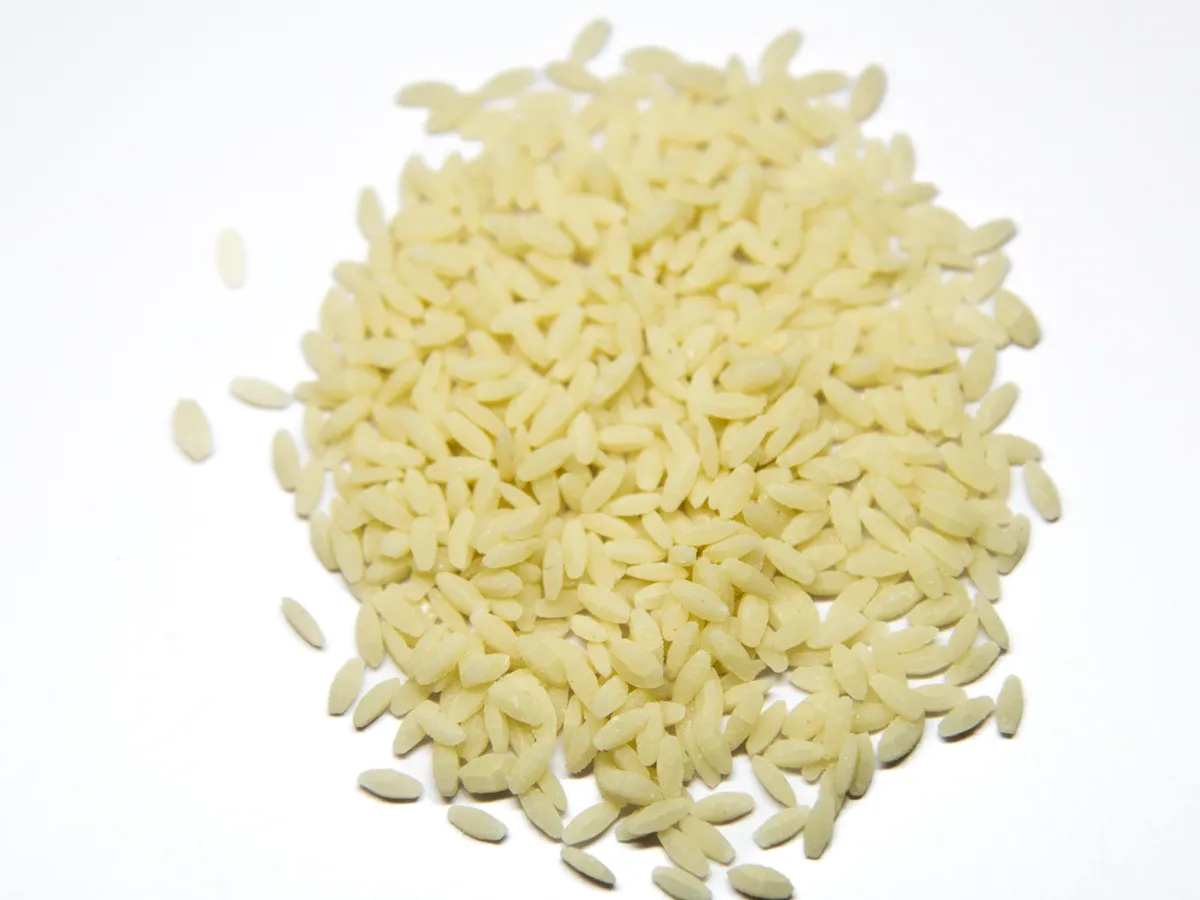
A fortified rice kernel (FRK) is an extruded rice-shaped kernel enriched with micronutrients - typically iron, folic acid, and vitamin B12. It is blended with regular milled rice at a 1:100 ratio (1 kg of FRK per 100 kg of rice), so the final rice that reaches the plate carries the added nutrients while cooking and tasting like ordinary rice. A few grains in a bag may look slightly different: those are the fortified kernels, about 1 in 100.
FRK exists because rice is the dominant staple across much of India, but milled white rice is low in several micronutrients that large parts of the population are deficient in. Rather than ask people to change what they eat, fortification adds the missing nutrients back into the grain they already consume every day. Zippy makes FRK using a patented process (Indian Patent 415401).
How FRK Is Made (At a High Level)
- Rice flour milling: Rice is milled in-house to a precise particle size to form the kernel base.
- Premix and fortification: A micronutrient premix (iron, folic acid, B12) is dosed into the flour using in-line feeding mixers, following the relevant fortification specification.
- Extrusion: The fortified dough is extruded into rice-shaped kernels. Our process is adapted from pasta extrusion and shapes the kernels to match the rice they are blended into.
- Steaming and drying: Controlled steaming and precision drying set the cooking behaviour, so the kernels cook at the same rate as the rice they are blended into.
- Grading, QC and packaging: Kernels are graded for size uniformity, tested, and packed with full batch traceability.
Extruded Fortification and Surface Coating
There is more than one way to add nutrients to rice. The two common methods differ in where the nutrient sits.
| Approach | Where the nutrient sits | How it is made |
|---|---|---|
| Extruded FRK (kernel matrix) | Inside the reconstituted kernel | Rice flour and premix extruded into rice-shaped kernels, then blended 1:100 with rice |
| Surface-coated rice | On the surface of the grain | Premix applied as a coating on whole rice grains |
In extruded FRK the micronutrients sit inside the kernel matrix; in surface-coated rice they sit on the grain. Whichever method you buy, ask the supplier for nutrient retention data after washing and cooking. Fortified pulse kernels carry their nutrients inside the kernel in the same way.
Kernels That Hold Their Shape in Cooking
A useful quality check for any FRK is whether the kernel holds its structure during cooking. A kernel that softens and breaks down in the pot can lose part of its fortification into cooking water that gets drained away.
Zippy's FRK holds its shape during cooking and does not dissolve in water, because of how the extrusion, steaming, and drying steps are controlled. For a buyer, that means a uniform cooked product and nutrients that stay in the grain.
Grain integrity after rehydration is also a core quality target for Zippy's instant dry rice.
Fortified Rice and Government Nutrition Programs
Public nutrition programmes have been a large source of FRK demand in India. On 27 February 2026 the Centre paused rice fortification under PMGKAY; states can still choose to fortify rice in their own schemes. Programme demand now depends on state decisions, so it is less predictable than it was.
Where rice is fortified, FRK is blended into milled rice at the standard 1:100 ratio at the rice mill or blending point, so the cooked rice carries iron, folic acid, and vitamin B12 without any change at the consumer end.
For a manufacturer, supplying fortified rice is less about the kernel recipe and more about the surrounding discipline: consistent micronutrient dosing batch after batch, full traceability, and the ability to pass testing. Those are the things to check when choosing a supplier, covered in the sourcing section below.
Micronutrient and Macronutrient Fortification
Fortification is not only about vitamins and minerals. The same extruded-kernel platform can carry two kinds of nutrition, separately or together in a single kernel:
- Micronutrient fortification: Iron, folic acid, vitamin B12, and zinc, dosed to specification. This is the classic FRK use case for public programs and for brands wanting an enriched rice SKU.
- Macronutrient enhancement: Boosting protein and fibre through the choice of base and added protein sources. Zippy's high-protein rice, for example, is made by extruding chickpea flour into rice-shaped kernels, addressing the protein gap in rice-heavy diets without asking anyone to change how they cook.
Handling both micro and macro in one extruded kernel is useful for brands building functional dal-chawal mixes, nutritionally upgraded khichdi products, or high-protein staple SKUs.
Fortified Pulses: Extending the Platform Beyond Rice
The same extrusion platform that makes FRK also makes fortified pulse kernels - extruded kernels made to the brand's recipe. They carry micronutrients (iron, folic acid, B12) or macronutrient enhancement (protein, fibre) inside the kernel matrix, and blend into regular pulses at a ratio set by the brand's recipe, so the final dal is nutritionally upgraded without any change to cooking behaviour, taste, or appearance. Zippy's fortified pulse kernels are in commercial supply to a consumer brand.
This matters for two reasons:
- Dal-chawal is the unit, not just rice. A brand or program running a staple-nutrition initiative can fortify both halves of the plate from a single supplier on a single platform, rather than sourcing rice and pulse fortification separately.
- Nutrients inside the kernel. As with rice, the micronutrients sit inside the extruded kernel rather than on the surface.
How to Choose an FRK Supplier: Testing Is the Real Filter
Fortified rice is tested against a specification, and a lot that fails testing is costly for everyone in the chain. Testing infrastructure is one of the main things to check in an FRK partner, not a back-office detail. These are the questions to ask any supplier.
What to look for
- In-house testing capability: A manufacturer with its own analytical lab can catch dosing or retention issues in real time, before a lot ships.
- NABL-accredited third-party testing as per FSSAI norms: Periodic accredited lab testing on the schedule FSSAI requires, on top of routine internal testing.
- Consistent micronutrient dosing: The premix has to land on spec batch after batch. Ask for dosing and test records across batches.
- Kernel that holds its shape: Ask specifically about cooking behaviour, and cook a sample yourself.
- Full batch traceability: Essential for program compliance and for tracing any issue back to source.
- Certifications: FSSC 22000 (the GFSI-recognised food safety standard) and a valid FSSAI licence covering the product category.
- Process maturity: A proven, repeatable process. Zippy makes FRK at its FSSC 22000-certified Jaspur plant (FSSAI licence 10015012000314), with 25 MT/day of fortified rice extrusion capacity and an MOQ of 5 MT.
For brands new to outsourcing production, the broader checklist in our private label food manufacturing guide covers certifications, capacity, R&D, MOQ, and lead times in more detail.
Market Opportunity
Fortified rice meets a real public-health need. After the February 2026 pause of rice fortification under PMGKAY, public programme demand depends on what each state decides, so branded, institutional and export demand matter more.
Beyond public programs, the same platform opens up branded and institutional opportunities:
- Enriched and high-protein retail rice SKUs for brands wanting a nutrition story without changing the consumer's cooking habit.
- Functional dal-chawal and khichdi products combining fortified rice and fortified pulses.
- Institutional nutrition for schools, hospitals, and large feeding programs that need consistent, testable quality at scale.
- Export of fortified staples to markets running their own nutrition initiatives.
It is also a category that rewards repeatable process control, in-house labs, and traceability.