Soft is harder than firm
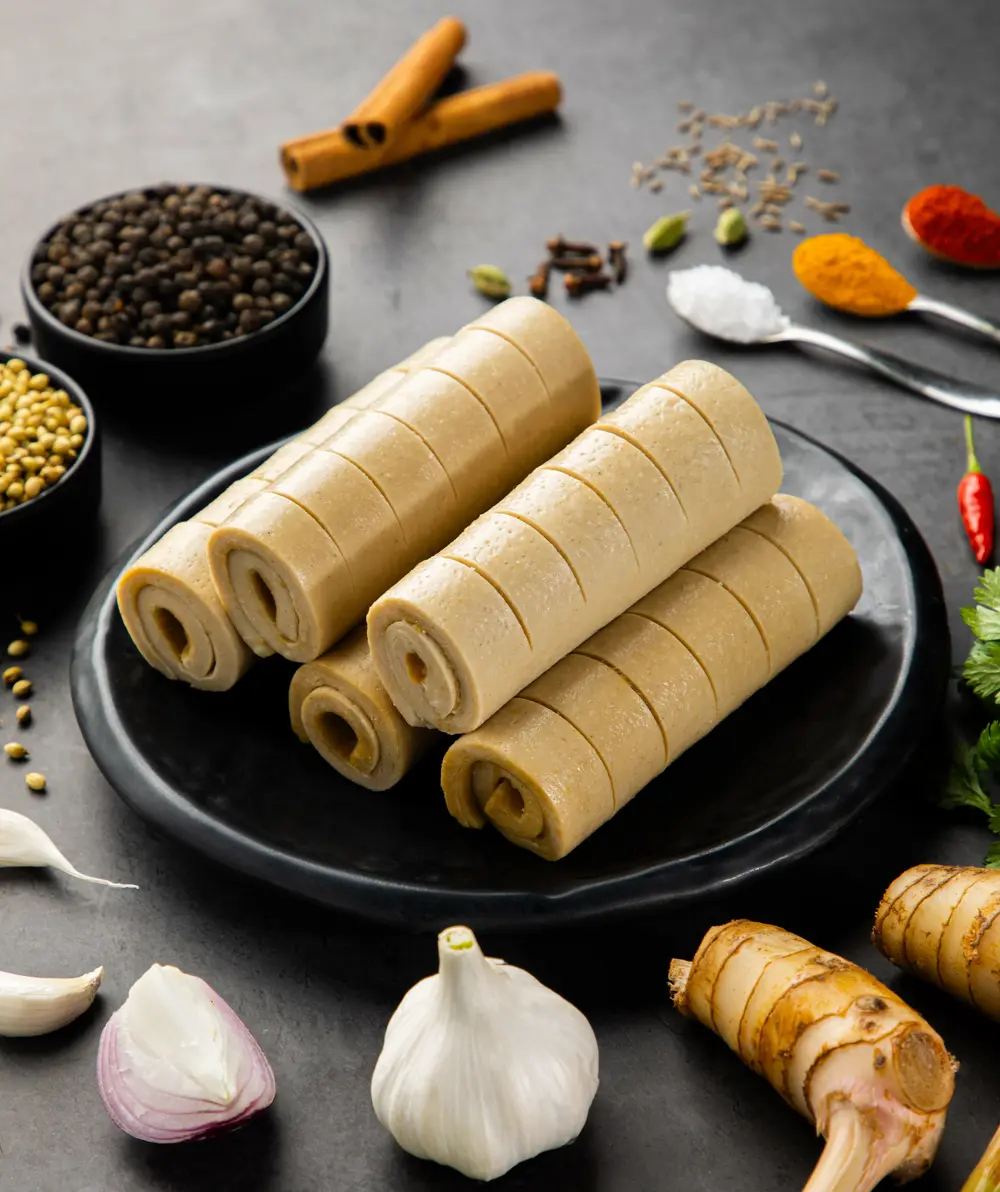
Here's the bit that surprised me. A firm, chewy protein is actually the easier thing to make. Push it dense and it holds together, slices clean, survives whatever you do to it. Chaap can't be that. It has to be soft and juicy, soak up a marinade overnight, take a sear in about a minute on a hot tawa or in the tandoor, and then sit in a gravy without falling apart or turning rubbery. Kitchens notice every one of those things, and a cook who gets a bad batch tells the owner that same evening.
Now do all of it at a price below paneer. That rules out the easy fixes, imported isolates and the like, and leaves you with commodity ingredients wherever possible and a process that has to do the work those expensive inputs would have done. Ours is maida-free and more than half soya on a dry basis. A plain roll comes in at about 20 g of protein, about 6.6 g of fibre and under half a gram of fat per 100 g. Getting those numbers and the softness into the same product, the same way every week, took us years.
Why it had to be a line
Market chaap is wrapped by hand onto a stick, and a good roller is genuinely skilled at it. Hand work grows one person at a time. A line grows by repeating the same design. Ours starts as a fibrous sheet off the high-moisture extruder, and a line we built in-house cuts it, rolls it continuously and glues it so the roll holds without a stick. Two granted patents cover that: #568286 for slicing and rolling high-moisture protein sheets into chaap rolls, granted in 2025, and #597337 for the continuous rolling and gluing process, granted in 2026. How that line came together is in why we took the stick out.
Why go to the trouble? Because the customer who grows chaap is a QSR chain, and a chain needs the tikka at its hundredth outlet to look and cook like the one in the kitchen where the menu was written. Same diameter, same bite, same cook time, so the SOP on the wall actually works.
Since 2022
We started building the high-moisture extrusion side in 2022. Rudrapur opened in 2023, and in 2026 we added a retort line so the same chaap can go into pouches and cans. Written down like that it looks tidy. It wasn't. Everything took longer than I planned, the rolling especially, where the early rolls wouldn't hold their shape and we ended up building our own machines because nothing we could buy would handle a sheet that soft.
It isn't a cheap kind of plant either. GFI's public model puts a two-line high-moisture extrusion plant (2022 model) at about $18 million. That's their model, not our spend. GFI India has also written about how few manufacturing-scale extruders the country has. Money gets you the machine. It doesn't get you a chaap a tandoor cook will accept, and that part is years of trials.
What scale means for chaap
Walk any North Indian market and you'll find chaap, at the stall, at the dhaba, at the chain down the road. It is largely unbranded. It doesn't even show up in the numbers: the 2025 Ipsos report for the Plant Based Foods Industry Association put India's plant-based food market at about Rs 300 crore and left chaap and soya chunks out. Paneer is at a similar stage: packaged brands are still a small slice of what's sold. Most chaap is made by small local units and sold loose. The brands that want to package it need someone who can make it to a spec, every week.
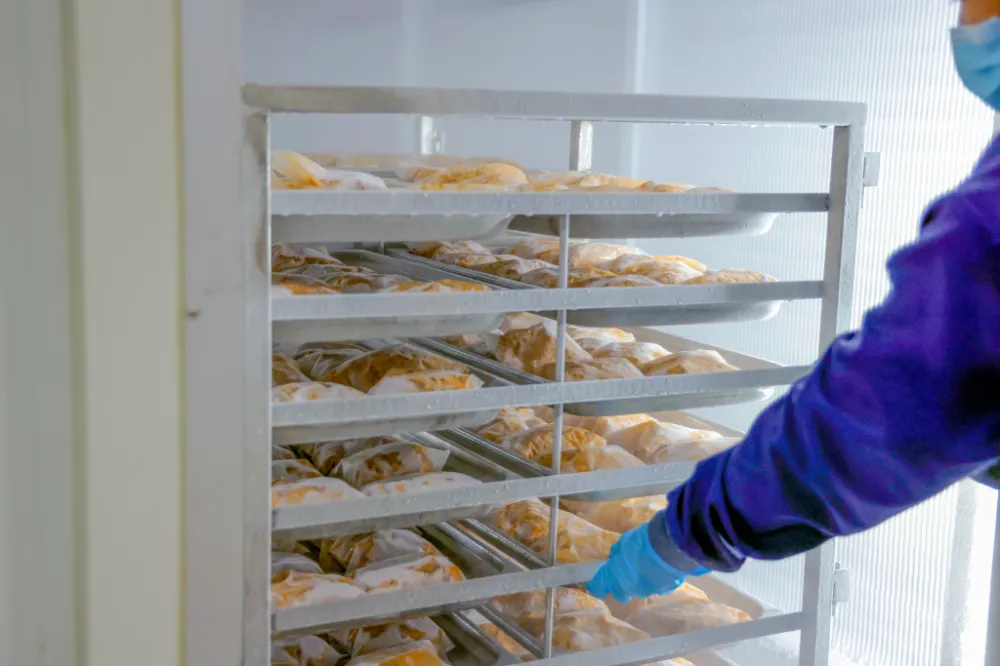
A brand also has to get that chaap to kitchens far from the plant, and that is where shelf life helps. Our frozen chaap lasts 18 months, and the canned one skips the cold chain entirely, which counts for a lot in towns where cold chain is patchy. We make for 30+ brands across our lines already. The basic facts about the company sit on one page.
Cheap on purpose
None of this is glamorous. Chaap has to cost less than paneer and chicken on the menu, and that turned out to be the hardest thing we make. When the price is fixed, the difficulty moves into the factory. That's where we've spent the years since 2022.
Frequently Asked Questions
Why is soya chaap cheaper than paneer per gram of protein?+
Is soya chaap the same as plant-based meat?+
What does Zippy patent in chaap making?+
What is in a plain Zippy soya chaap roll?+
Go Deeper
About the author
Sarthak Singhal is a director of Zippy Edibles, writing from the manufacturing side of the business. Before food, he was a mixed-signal and analog chip-design engineer (Intel, Analog Devices) and studied engineering at Georgia Tech. Connect on LinkedIn →